Best Hairstyles for Oval Faces
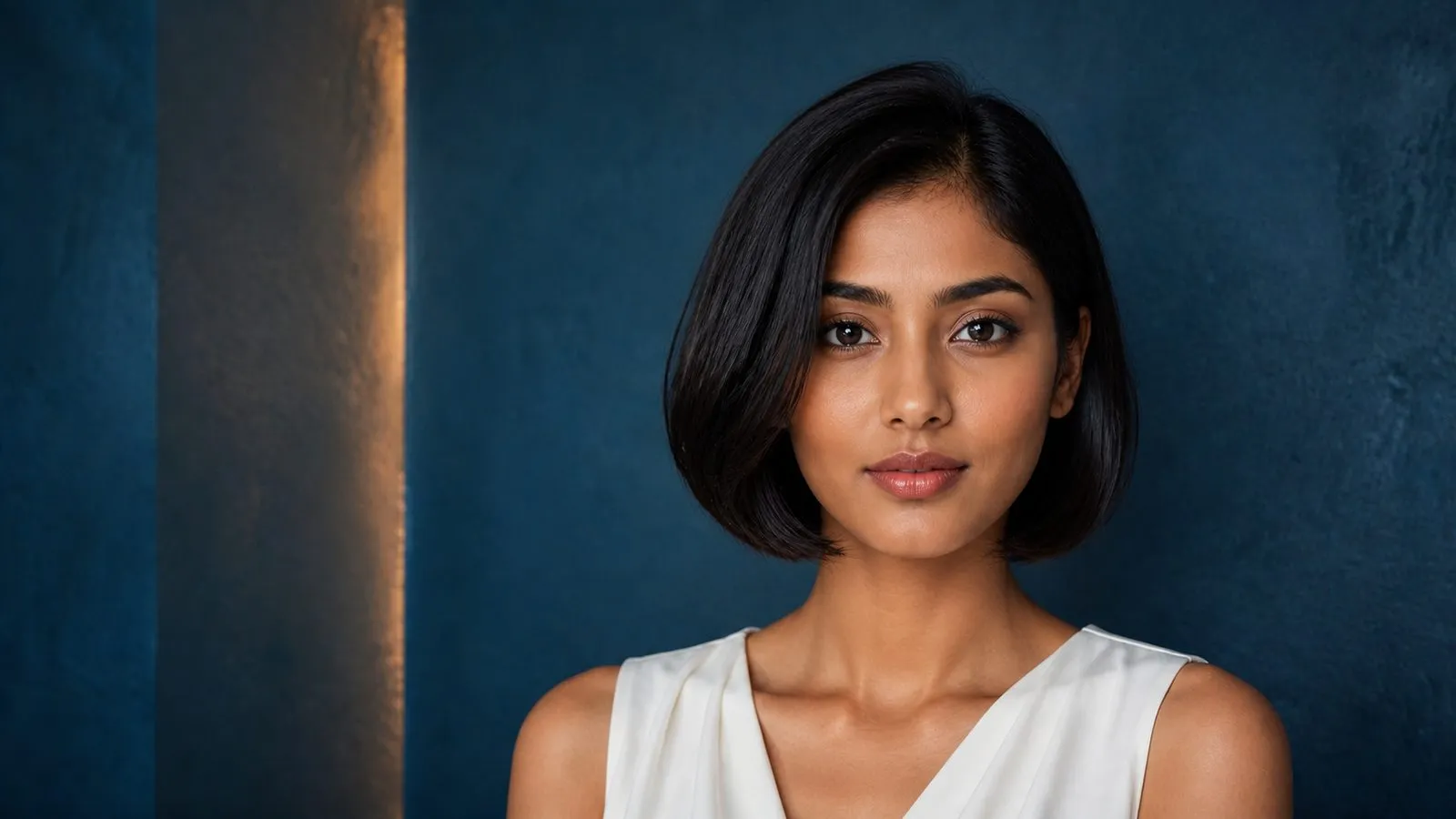
The best hairstyles for oval faces are a sculpted bixie, a jaw-skimming Italian bob, a blunt clavicut, a butterfly cut, a rounded curly bob, and a tapered natural crop. An oval face is already softly balanced from forehead to chin, so your haircut does not need to create length, disguise width, or soften a strong jaw. It can do something more interesting: focus attention exactly where you want it.
That changes how to use this guide. Instead of treating one cut as the universal “most flattering” answer, choose a result—stronger cheekbones, fuller-looking ends, more movement, less styling time, or a texture-first silhouette. Face shape gets you into the right fitting room; your hair density, pattern, hairline, and routine choose what comes home.
Start with the result you want
| Your priority | Start with | Why it works on an oval face | Realistic upkeep |
|---|---|---|---|
| Put eyes and cheekbones forward | Sculpted bixie | Opens the face and lets balanced features lead | Shape-up every 4–6 weeks |
| Make fine hair look denser | Italian bob | Keeps a plush, weighty perimeter around the jaw | Trim every 6–8 weeks |
| Look polished without going short | Blunt clavicut | Creates one clean line while preserving styling options | Trim every 8–10 weeks |
| Keep length but add movement | Butterfly blowout | Builds width and lift through cascading layers | Cut every 10–12 weeks |
| Let curls define the silhouette | Rounded curly bob | An oval face can carry side volume without needing correction | Curl-by-curl refresh every 8–12 weeks |
| Keep coils short and expressive | Tapered natural crop | Exposes the facial outline and makes texture the focal point | Taper cleanup every 4–6 weeks |
Oval, round, or oblong? Check before choosing
An oval face is longer than it is wide, usually widest around the cheekbones, and narrows gradually toward a softly rounded jaw and chin. The forehead may be a little wider than the jaw, but no one measurement or angle dominates.
The two most common mix-ups are round and oblong:
- Oval vs. round: both have soft edges, but a round face is closer to equal in length and width and often looks fullest through the cheeks. If that sounds closer, use our separate guide to the best hairstyles for round faces, where the recommendations deliberately create more vertical or diagonal movement.
- Oval vs. oblong: both are longer than wide, but an oblong face has more obvious length and may have straighter side lines or a taller forehead. If you sit between them, favor cheek-level movement, a fringe, or a bob over extra crown height.
- Oval with another influence: a tapered chin can lean heart-shaped, while a more defined jaw can lean square. Most faces are blends, so follow the feature you most want the haircut to work with.
Pull your hair away from your face and use a straight-on photo in even light. Compare forehead, cheekbone, and jaw width, then look at the total length from hairline to chin. Our complete face-shape haircut guide shows the six common outlines side by side, and the face-shape analysis tool can give you a second opinion from a selfie.
Why oval faces get a different kind of haircut advice
Advice for a round face often tries to add length. Advice for a square face often introduces softness. An oval face does not have an equivalent correction to make, which is why generic lists can feel vague: “almost anything works” is true but not useful.
The practical advantage is freedom to use stronger shapes. You can expose the whole face with a crop, place a blunt line at the jaw, build width into curls, or wear a full fringe without first compensating for one dominant proportion. The smartest choice is the cut that makes your favorite feature more visible and behaves well in your real hair.
If you want your cheekbones to lead: the sculpted bixie
A bixie cut sits between a bob and a pixie: short enough to expose the jaw and neck, but long enough to keep movement around the temples, ears, and crown. On an oval face, that open outline directs attention toward the eyes and cheekbones without needing the exaggerated crown height often recommended for a round face.
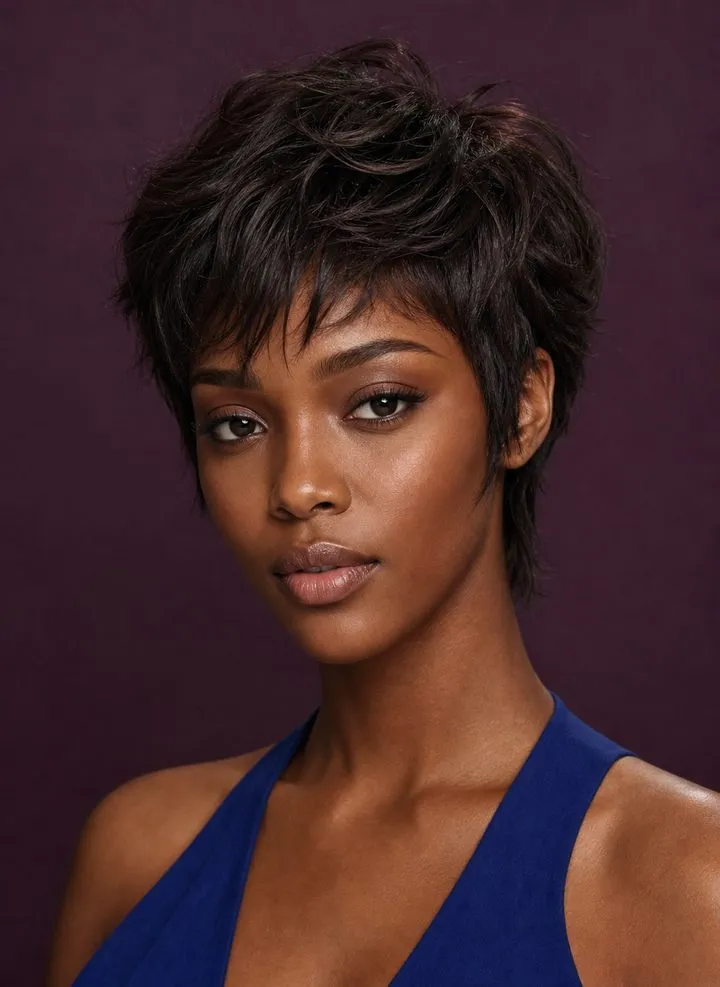
Try a sculpted bixie on your face →
Ask for softly tapered sides and nape, a little movable length on top, and wisps that can sit forward or tuck back. Fine hair benefits from a fairly solid top layer; thick hair needs internal weight removal so the crop does not inflate into a helmet. If you want more sweep over the forehead, a long pixie is the easier-growing version.
If you want polished fullness: the Italian bob
The Italian bob is fuller and softer than a precision French bob. It usually lands around the jaw or just below it, with enough weight in the ends to flip, bevel, tuck, or air-dry into a gentle bend. That plush perimeter is especially useful when fine-to-medium hair needs to look more substantial.
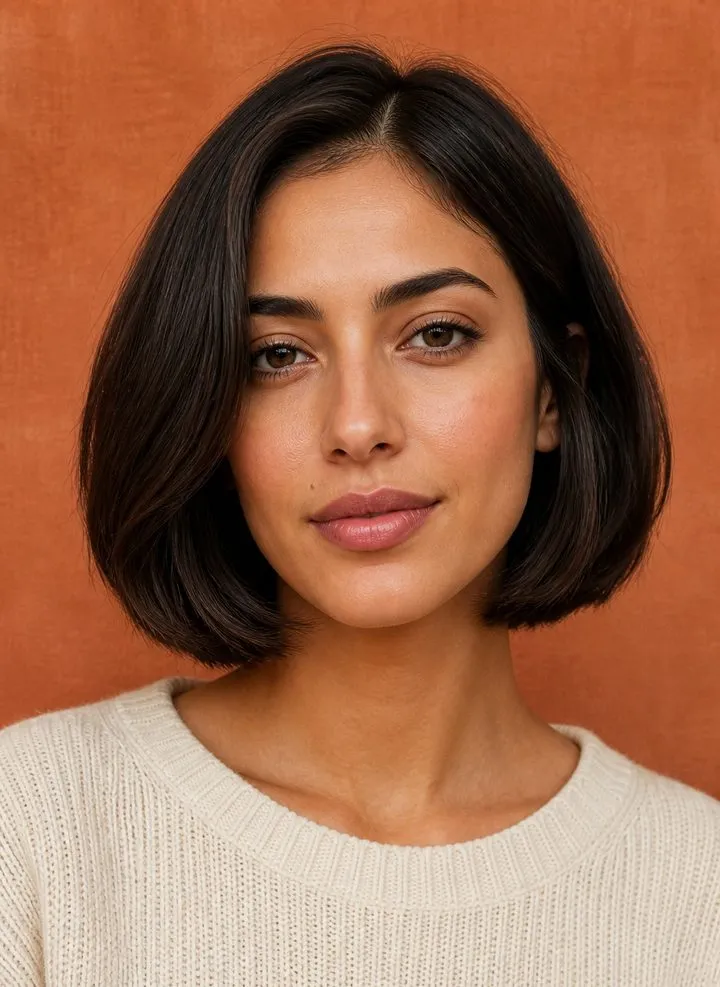
Try an Italian bob on your face →
An oval face can wear this cut with a center part for graphic symmetry or a soft side part for root lift. Ask your stylist to preserve the outline, then customize only the interior: minimal hidden layers for fine hair, more weight removal for dense or wavy hair. The result should swing rather than stack.
If you want a strong line: the blunt clavicut
A blunt clavicut ends at the collarbones with little or no visible graduation. Unlike an angled lob chosen to make a round face appear longer, this version is not performing a proportion trick. Its appeal is the clean horizontal edge, the thicker-looking ends, and the ability to switch between straight, softly bent, tucked, and tied-back styling.
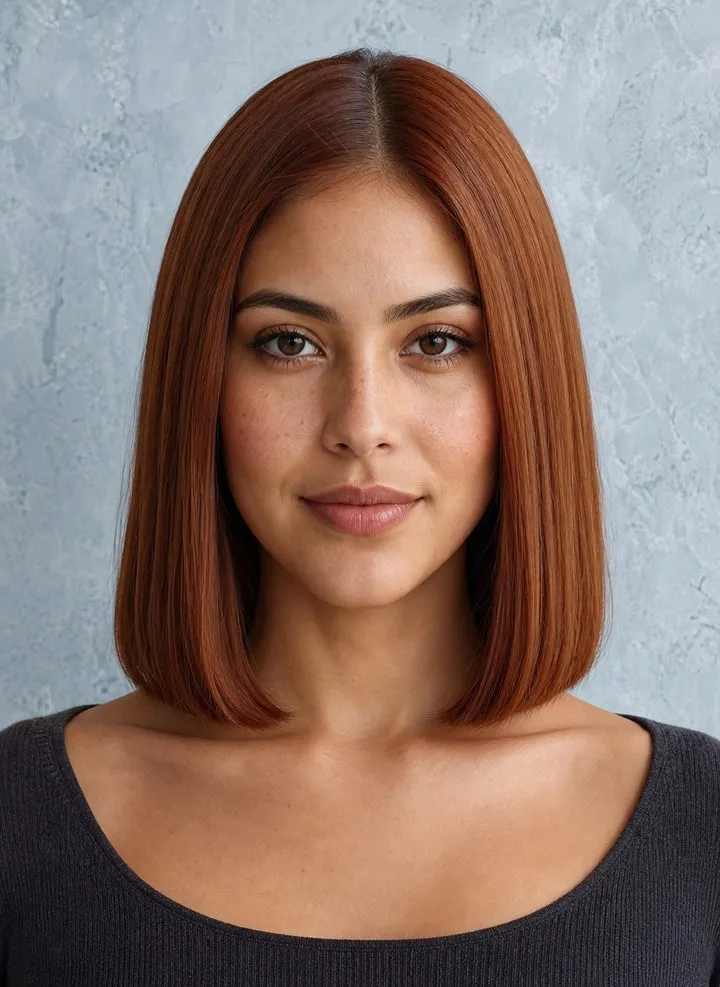
Try a blunt clavicut on your face →
Ask for a one-length lob that clears the shoulders when dry, not just when pulled straight. If your hair is fine, keep face-framing almost invisible so the bottom line stays dense. If it is thick, ask for discreet internal debulking rather than short surface layers that disturb the polished shape.
If you want long hair to move: the butterfly blowout
The butterfly cut keeps the main length while carving shorter, winged layers around the front and through the upper lengths. Styled with a soft 1990s blowout, it creates movement at the cheekbones, jaw, and shoulders instead of leaving long hair as one flat curtain.
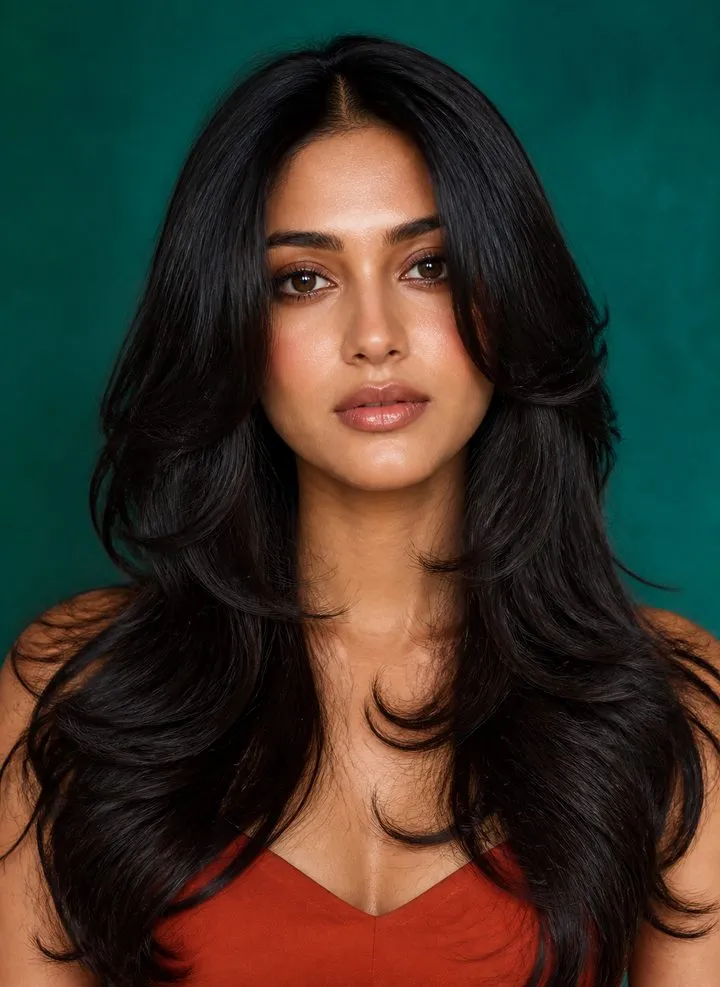
Try a butterfly cut on your face →
The placement matters more than the number of layers. Ask for the shortest wing to begin where you want attention—near the cheekbone for lift, around the jaw for a softer frame—and keep enough length between layers that the cut also works without a round-brush blowout. If your face leans oblong, put the fullness at the sides rather than building a tall crown.
If you want your natural curls to be the shape: the rounded curly bob
An oval face does not need curls flattened at the sides. A rounded curly bob can expand through the temples and cheeks, then taper lightly near the neck, turning the hair’s natural volume into the design. A few shorter curls over the forehead make the shape feel intentional without becoming a dense, rigid fringe.
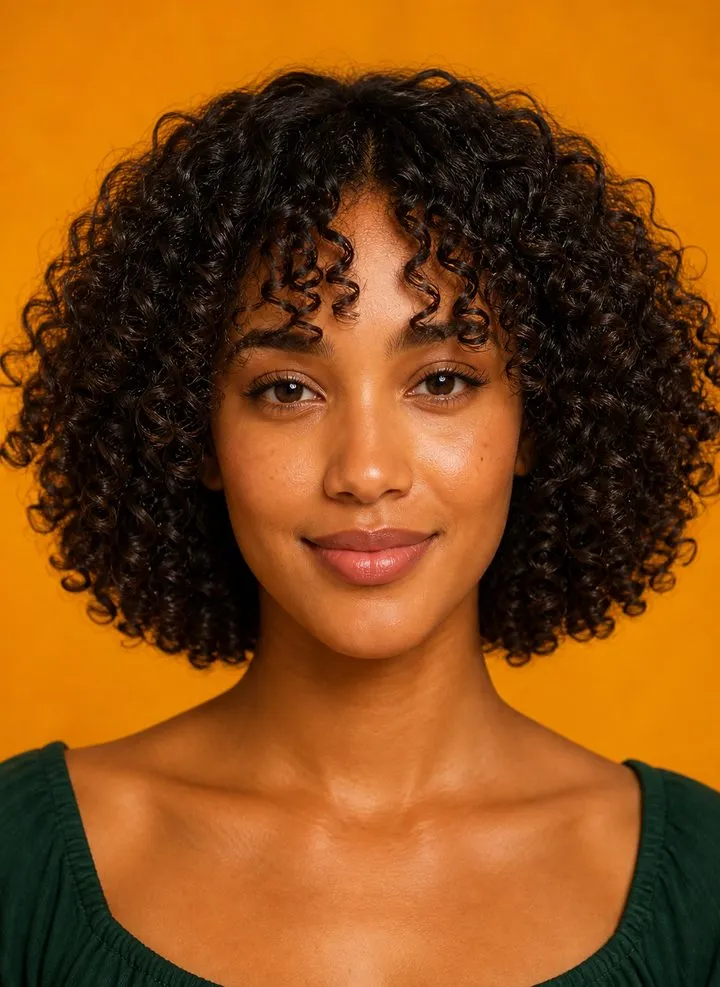
Try a rounded curly bob on your face →
Bring references with a curl pattern and density close to yours. Ask the stylist to establish the silhouette on dry or naturally settled hair, account for shrinkage, and preserve enough weight to prevent a triangular base. The best version looks balanced in its ordinary air-dried state—not only after every curl has been individually styled.
If you want compact, texture-first definition: the tapered coil crop
A tapered natural crop keeps the sides and nape neat while leaving enough length on top to show the coil pattern. Because an oval face is already balanced, the top does not need to be pushed into a dramatic high shape; a softly even, sculpted silhouette keeps the attention on texture, eyes, and bone structure.
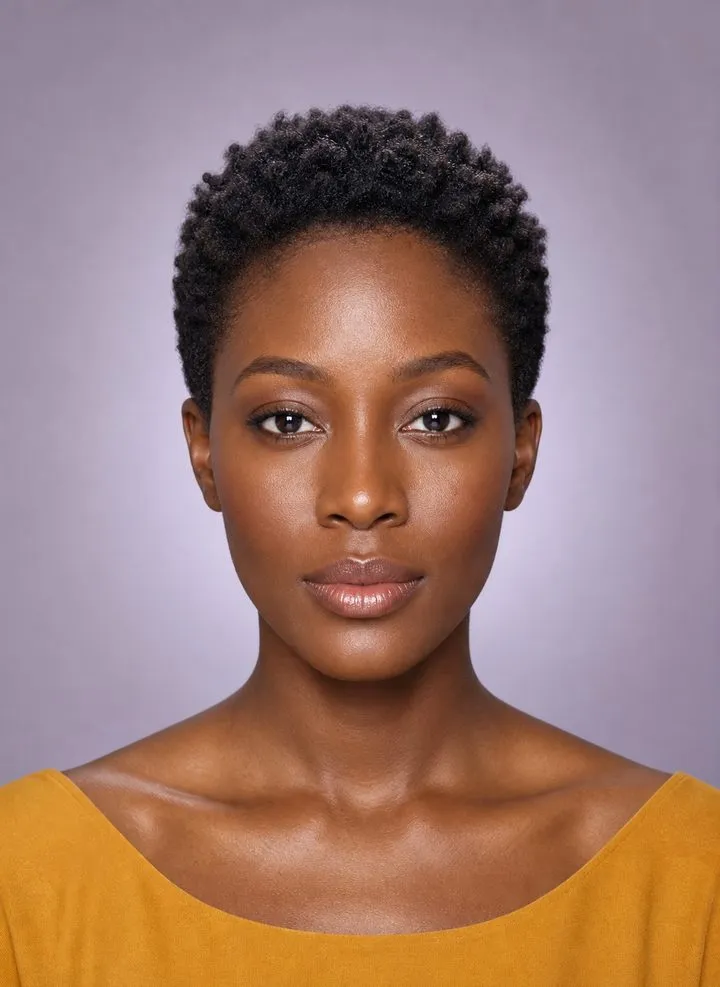
Try a tapered natural crop on your face →
Ask for a taper that follows your natural hairline and leaves your preferred amount of temple coverage. Discuss shrinkage before the first cut and decide whether you want a crisp outline or a softer lived-in edge. If you prefer more length, a twist-out or box braids can preserve the same texture-led focus with adjustable parting and volume.
Which bangs suit an oval face?
Oval faces can wear more fringe shapes than most, so begin with the effect and the upkeep—not a rule about what is “allowed.”
| Fringe | What it emphasizes | Best match | Watch for |
|---|---|---|---|
| Bottleneck bangs | Eyes and upper cheekbones | Straight, wavy, or loose-curly hair | Needs regular reshaping through the center |
| Wispy eyebrow fringe | Eyes without hiding the forehead completely | Fine to medium density | Can separate on oily hair or in humidity |
| Full blunt fringe | Brows and the horizontal line of a bob | Straight, dense hair; oval faces that lean long | Visually shortens the face and requires frequent trims |
| Curly fringe | Natural pattern and facial softness | Curly or coily cuts with a rounded silhouette | Must be cut with shrinkage in mind |
| Micro fringe | Forehead, brows, and a graphic cut shape | Confident short bobs and crops | High commitment and a conspicuous grow-out |
Curtain bangs remain the easiest low-risk option because they open in the center and blend as they grow. But they are not the only “correct” bang for an oval face. If your forehead is shorter, keep the fringe light or start it farther back; if your face leans oblong, an eyebrow-skimming fringe can provide welcome visual width.
Let hair texture and density break the tie
Face shape tells you where a cut can sit. Hair behavior tells you whether it will still look good on an ordinary Tuesday.
- Fine or thin hair: Favor a blunt bob, clavicut, or lightly layered bixie. Strong perimeters make the ends look denser; too many short layers can make the lengths appear sparse.
- Thick straight hair: Keep the outline you like and remove weight invisibly inside it. Without that step, an Italian bob can become triangular and a butterfly cut can feel heavy rather than buoyant.
- Wavy hair: Choose a cut that has a good air-dried shape. A soft bob, long shag, or butterfly layers can use the bend rather than requiring it to be ironed out.
- Curly hair: Design the silhouette at its natural spring. Rounded volume, a curl-by-curl fringe, and layered bobs all work beautifully on an oval face when shrinkage is built into the plan.
- Coily hair: Tapered crops, rounded Afros, twist-outs, and protective styles all suit the balanced outline. Decide where you want the widest point before choosing layer or braid length.
For a closer look at how perimeter, length, and layer placement affect density, see our guide to the best haircuts for fine hair.
If you want a more trend-driven option, an oval face can also carry the strong contrast of a modern mullet or even a jellyfish cut. Those cuts are less universal, but that is exactly why an oval face’s neutral starting point is useful.
What changes when you wear glasses?
Glasses add their own line across the face, so check the haircut and frames together. A heavy fringe plus thick frames can crowd the eyes; opening the fringe or tucking one side may restore space. A sculpted crop exposes statement frames, while butterfly layers and a soft bob keep stronger frames from feeling severe.
Part placement can also respond to the glasses rather than the face. A middle part echoes symmetrical frames; a slight side part offsets an angular or asymmetric pair. Take your everyday glasses to the salon and keep them on when the stylist checks the finished balance.
The maintenance matrix nobody should skip
| Cut | Daily styling | Salon rhythm | Grow-out character |
|---|---|---|---|
| Sculpted bixie | 3–8 minutes of texture or smoothing | 4–6 weeks | Front pieces reach the jaw first; about a year back to a lob |
| Italian bob | Air-dry with product or 10-minute bend | 6–8 weeks | Loses its plush jaw line but grows into a lob cleanly |
| Blunt clavicut | Low; polish the ends when wanted | 8–10 weeks | Very forgiving because the perimeter stays simple |
| Butterfly cut | Low air-dried, higher for a full blowout | 10–12 weeks | Front wings soften first; overall length remains |
| Rounded curly bob | Product and curl refresh vary by pattern | 8–12 weeks | Silhouette expands and may need selective reshaping |
| Tapered coil crop | Moisture and quick definition | 4–6 weeks | Taper softens before the top loses its shape |
Choose the row whose unstyled version you can live with. A haircut that is perfect for your face but wrong for your schedule is not your most flattering cut.
What should oval faces avoid?
No haircut is forbidden, and an oval face is especially forgiving. The better question is which combinations can push your proportions somewhere you did not intend.
- Very long, flat, one-length hair plus high crown volume can make an oval face read more oblong.
- A dense fringe plus cheek-heavy volume can hide the balanced outline rather than frame it.
- Excessive layering can make fine hair look thin even when the face shape suits the cut.
- A jaw-length style cut without accounting for curl shrinkage may finish much shorter and wider than the reference.
- A dramatic trend chosen without a grow-out plan can become more work than the original haircut.
These are design tradeoffs, not beauty rules. If you want the exaggerated length of glass-straight hair or the graphic impact of a full fringe, wear it deliberately.
Build a salon brief, not a face-shape request
Do not walk in with only “I have an oval face.” Bring two or three references that match your texture and describe the job you want the cut to do. A useful starting script is:
“My face is softly oval, and I want the cut to emphasize my [eyes, cheekbones, curls, or hair density]. I usually spend about [number] minutes styling. Please show me where the perimeter and shortest layer will sit when my hair is dry, and tell me what this shape will look like after eight weeks.”
Then ask three practical questions: Will the reference work with my natural density? What part of the cut requires heat styling? Which section will lose its shape first? Those answers are more predictive than face shape alone.
Try three intentions, not three nearly identical cuts
When almost everything is technically flattering, comparing three similar long-layer photos does not teach you much. Test one cut that feels safe, one that changes the silhouette, and one that puts your natural texture first—for example, a clavicut, a bixie, and a rounded curly bob.
Get The Look lets you preview those different shapes on the same selfie, so you can see whether you prefer exposed cheekbones, a stronger perimeter, or more volume around the face. Keep the photo, angle, and expression identical between tests; our guide to trying hairstyles on your own face explains how to make the comparison fair.
The real advantage of an oval face is not that every haircut is automatically perfect. It is that proportion stops making the decision for you. Choose the cut that makes your best feature louder, works with your natural texture, and still feels good on the days you do the minimum.
FAQs
- What is the most flattering haircut for an oval face?
- There is no single winner because oval faces already have balanced proportions. A jaw-skimming Italian bob is an excellent short-to-medium choice, a sculpted bixie highlights the eyes and cheekbones, and a butterfly cut keeps long hair full of movement. Let hair texture, density, and upkeep break the tie.
- How can I tell whether my face is oval or oblong?
- Both shapes are longer than they are wide, but an oval face has a softer, more gradual curve from forehead to cheekbones to jaw. An oblong face is noticeably longer, often with straighter sides or a longer forehead. If you sit between the two, keep width near the cheeks and avoid combining very long flat hair with high crown volume.
- Do bobs look good on oval faces?
- Yes. Oval faces can wear a French bob, Italian bob, blunt bob, or collarbone lob because the jaw and forehead are already balanced. Choose the exact length by what you want to emphasize: jaw length spotlights the lower face, while a collarbone cut gives fine hair a strong perimeter with an easier grow-out.
- What bangs are best for an oval face?
- Bottleneck bangs, curtain bangs, wispy eyebrow-skimming fringe, curly bangs, and even a short micro fringe can all suit an oval face. Choose by hairline and styling commitment. A dense full fringe visually shortens the face, while an open or separated fringe keeps more of the original length visible.
- What hairstyle makes thin hair look fuller on an oval face?
- A blunt Italian bob or one-length clavicut usually makes fine or thin hair look fuller because the perimeter stays dense. Keep face-framing light and avoid removing too much interior weight. A shallow side part can also create lift without changing the balanced outline of an oval face.
- Should an oval face have a middle or side part?
- Both work. A middle part emphasizes symmetry and looks sharp with a bob, clavicut, or long layers. A soft side part adds root lift and draws attention to the eyes. Use your natural growth pattern, glasses, and preferred volume as the deciding factors rather than face shape alone.