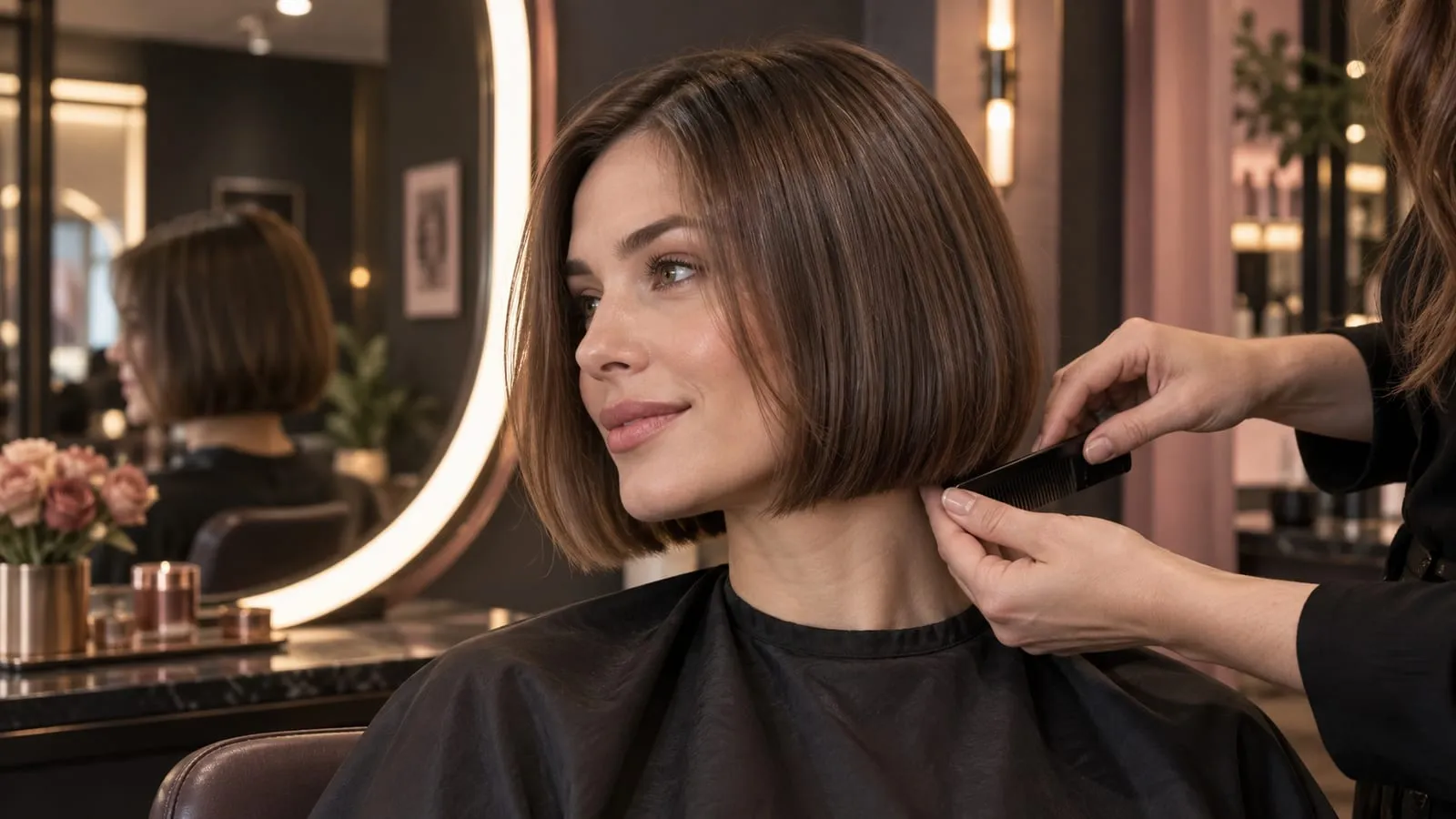
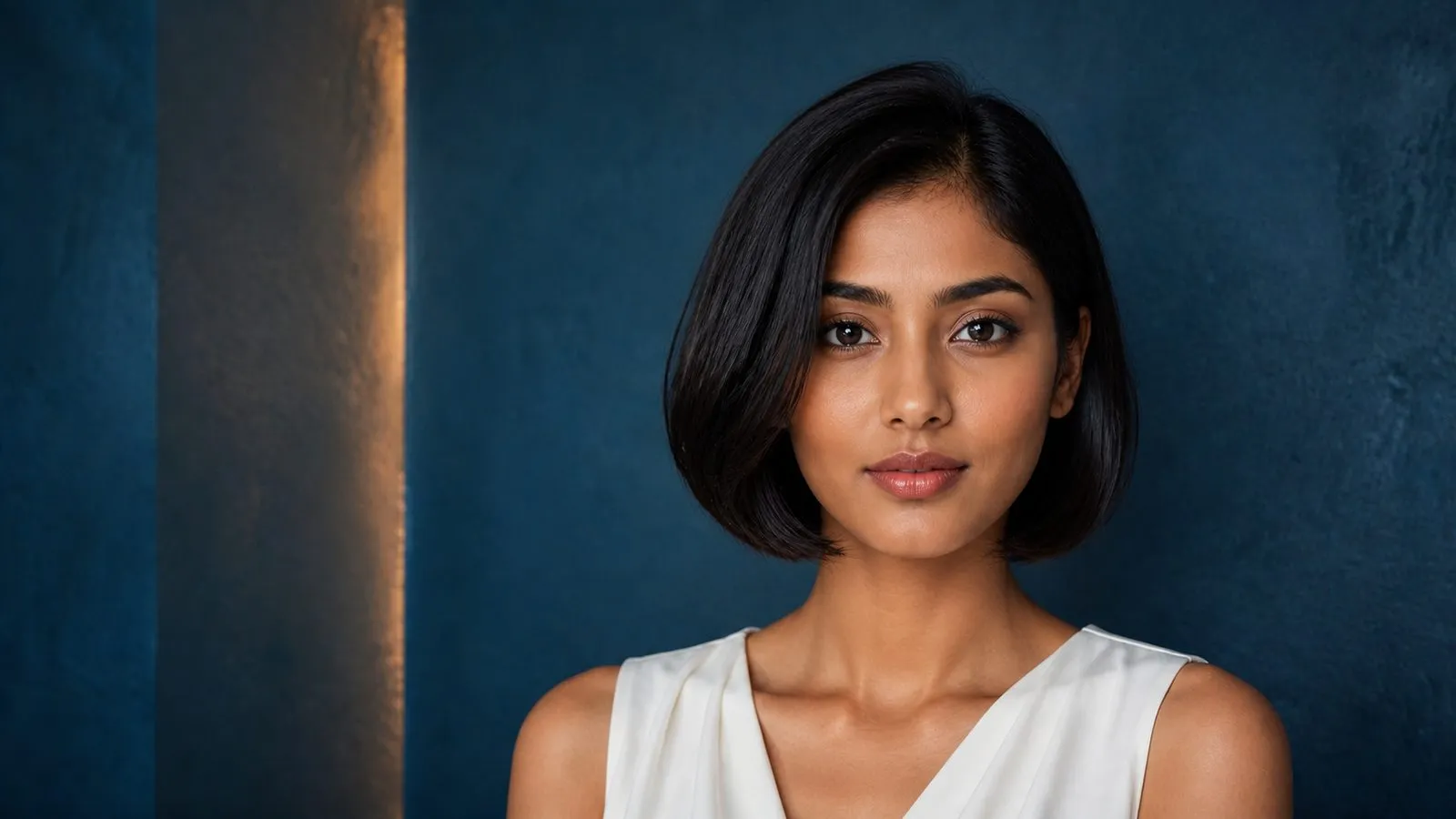
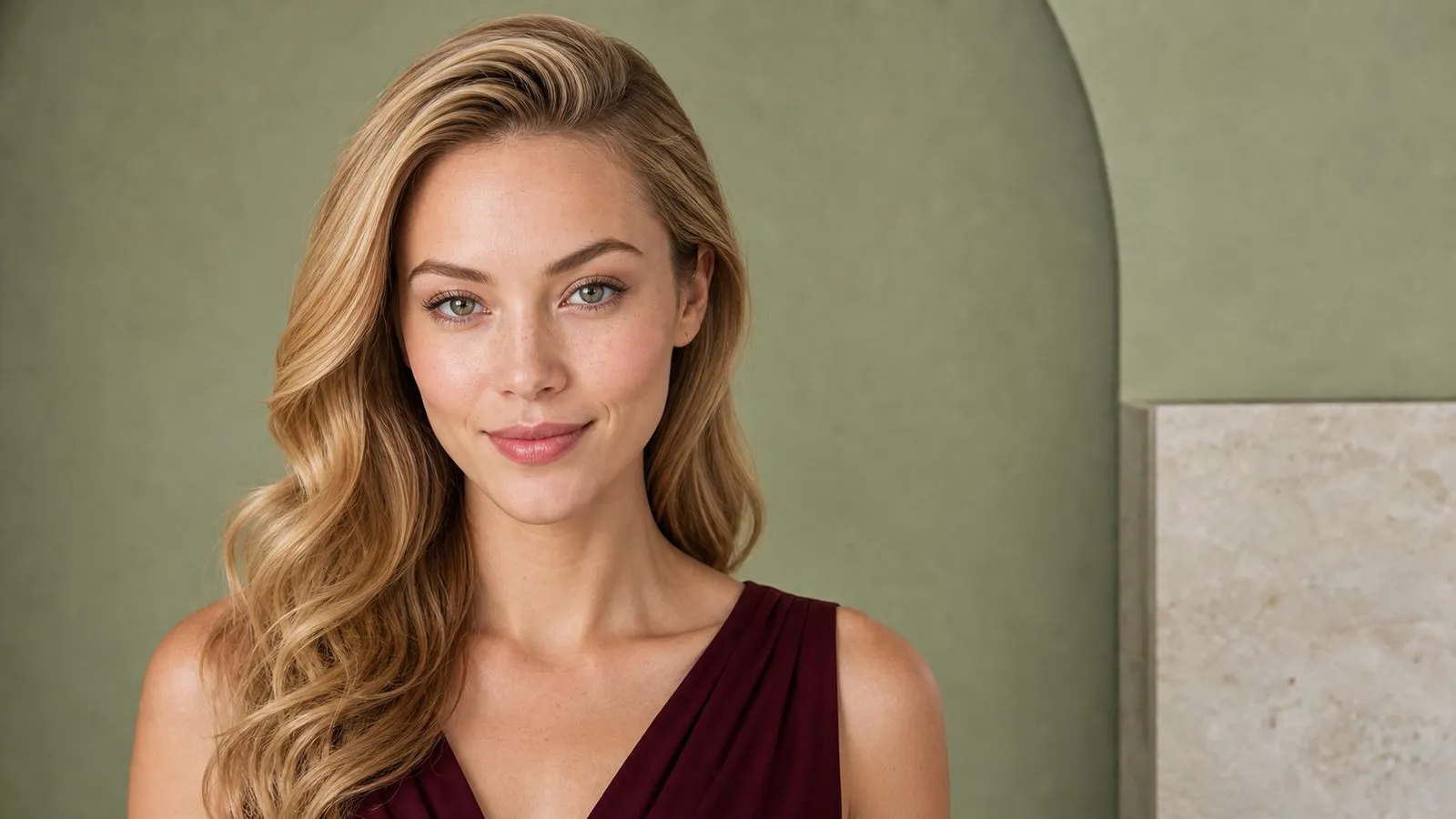
Should I Get Bangs? 7 Bang Trends Taking Over 2026
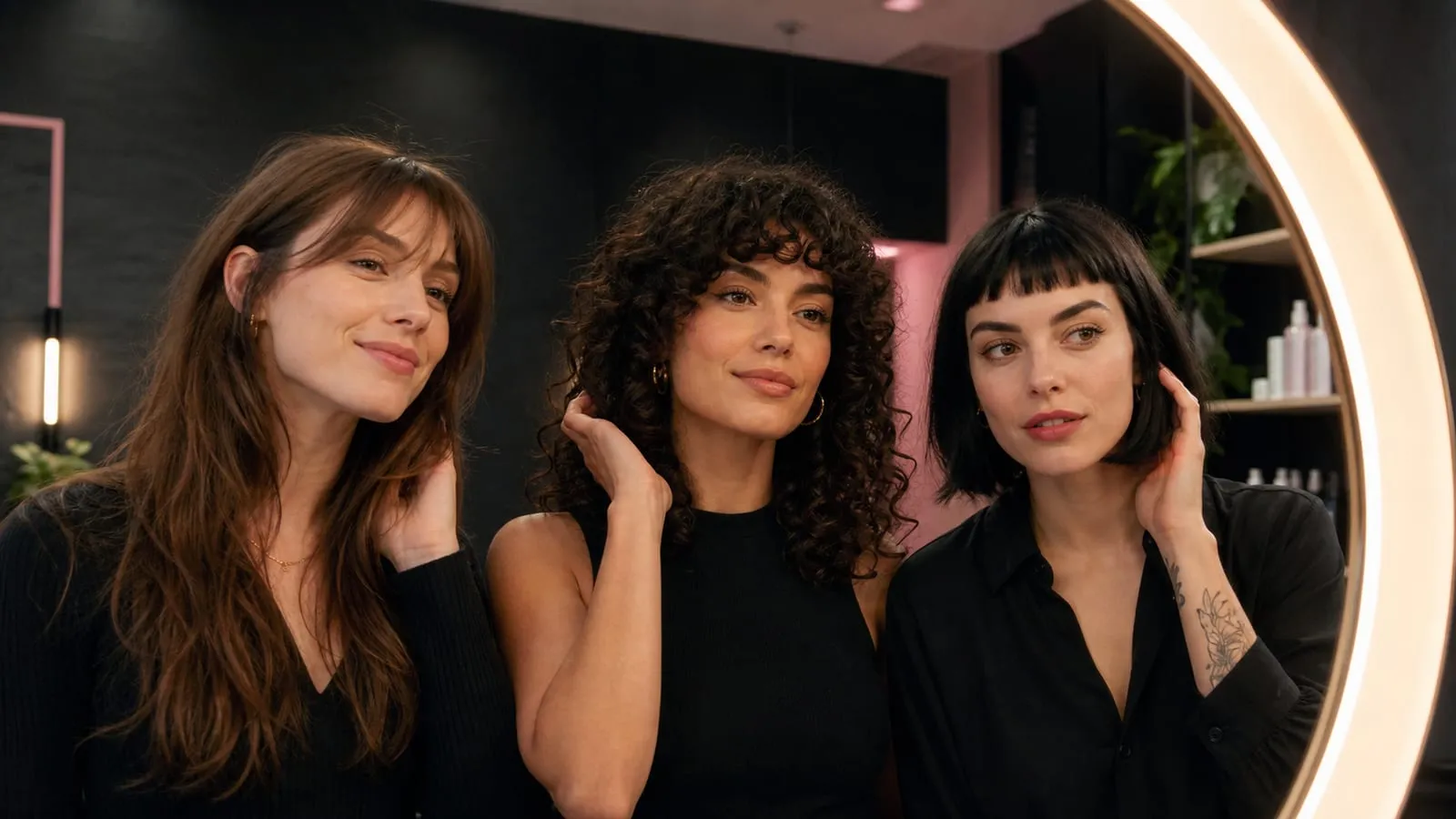
You should get bangs if you want your haircut to feel different without giving up your overall length—and if you are willing to style one small section of hair more often than the rest. The important decision is not simply bangs or no bangs. It is how much forehead you want covered, how precisely the fringe must sit, and what you want it to become when you grow it out.
That is why the biggest bang trends of 2026 are not one uniform look. At one end, whisper fringe is barely there and easy to sweep away. At the other, micro bangs are a deliberate graphic line. Between them are airy cloud bangs, fuller curtain bangs, separated piecey fringe, a revived side sweep, and curls cut to spring naturally over the forehead. If you are considering a bigger change than fringe, start with the wider edit of trending haircuts for women in 2026.
Use this guide as a commitment ladder. Pick the version whose ordinary Tuesday you like—not only the freshly styled salon photo.
The 60-second fringe forecast
| If you want… | Try… | Commitment | Morning reset | Easiest exit |
|---|---|---|---|---|
| The smallest visible change | Whisper fringe | Low | 1–3 minutes | Sweep into a side part |
| Softness that still reads as bangs | Cloud bangs | Low–medium | 2–4 minutes | Blend into face-framing layers |
| A polished, versatile frame | Curtain bangs | Medium | 3–6 minutes | Open the center and grow the sides |
| Texture without a perfect line | Piecey bangs | Medium | 2–5 minutes | Wear separated or push sideways |
| A nostalgic change without a full fringe | Side-swept bangs | Medium | 3–6 minutes | Tuck or blend into layers |
| A sharp fashion statement | Micro bangs | High | 2–5 minutes | Accept a visible grow-out phase |
| A texture-first silhouette | Curly bangs | Medium | Varies by refresh routine | Merge into short curly layers |
The table is a filter, not a ranking. If you dislike hair touching your forehead, even the “easy” options will feel high maintenance. If you already refresh curls or blow-dry your front layers each morning, the extra work may be almost invisible.
Make the fringe contract before you choose a trend
Answer these five questions honestly:
- Will you style them after sleeping? Bangs are the first part of a haircut to show bed movement, oil, rain, and sweat.
- Where does your hair naturally split? A center growth pattern supports curtain bangs; a strong side direction may make a sweep easier. Work with the pattern unless you genuinely enjoy resetting it.
- How often will you trim? The shorter and blunter the line, the sooner growth shows — every two to three weeks for micro bangs, three to four for cloud, piecey, or curtain fringe kept at its cut length, and four to six for whisper and side-swept lengths you let drift. Curly bangs run on their own clock: judge them dry.
- Do you wear glasses or work out often? Frames, forehead contact, and frequent washing change how a fringe sits during the day.
- What is your exit plan? “I can pin it back” is not a plan if you hate clips. Choose a fringe that can become a layer you would actually wear.
If two or more answers made you hesitate, begin at the low-commitment end. You can always take more length and density away at a second appointment. You cannot put either back after the first cut.
Cloud bangs: the soft-focus fringe
Cloud bangs are light, feathered pieces that float across the brows and dissolve into the surrounding haircut. They are fuller than whisper fringe but airier than a classic straight-across bang. The result looks intentional without creating one heavy block over the forehead.
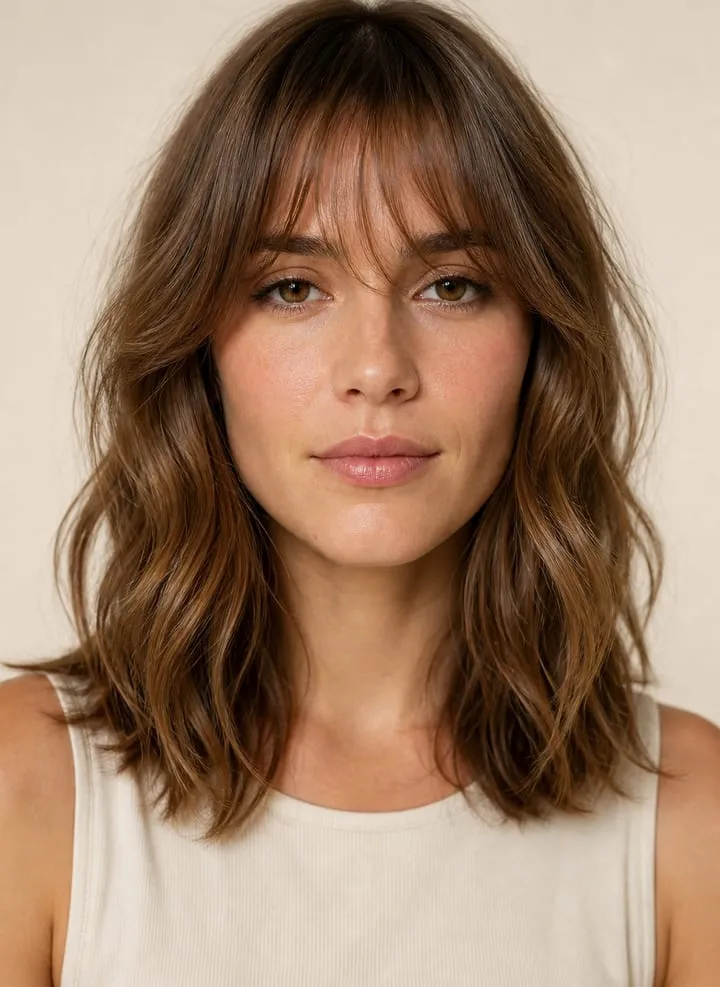
Try cloud bangs on your face →
The honest morning: Cloud bangs need movement, not a perfect bend. Dampen only the fringe, direct the roots forward, then move them gently from side to side while drying. Too much round-brush curl can turn “cloud” into a puffy curtain.
The best starting hair: Fine-to-medium straight or wavy hair that can hold a light bend. Dense hair can wear the look too, but the stylist must take a genuinely small section or the fringe becomes heavier than intended.
The escape route: Push the pieces sideways and let them merge into soft face-framing layers.
Say this in the chair: “I want an airy eyebrow-skimming fringe with visible separation, feathered edges, and longer pieces that disappear into my front layers. Please keep the section light.”
Whisper fringe: the almost-bangs option
Whisper fringe is the lowest-volume choice in this edit: a few fine strands over the forehead, usually with delicate temple pieces. Its job is to change the frame around the eyes without closing the forehead or forcing the rest of the haircut into a new shape.
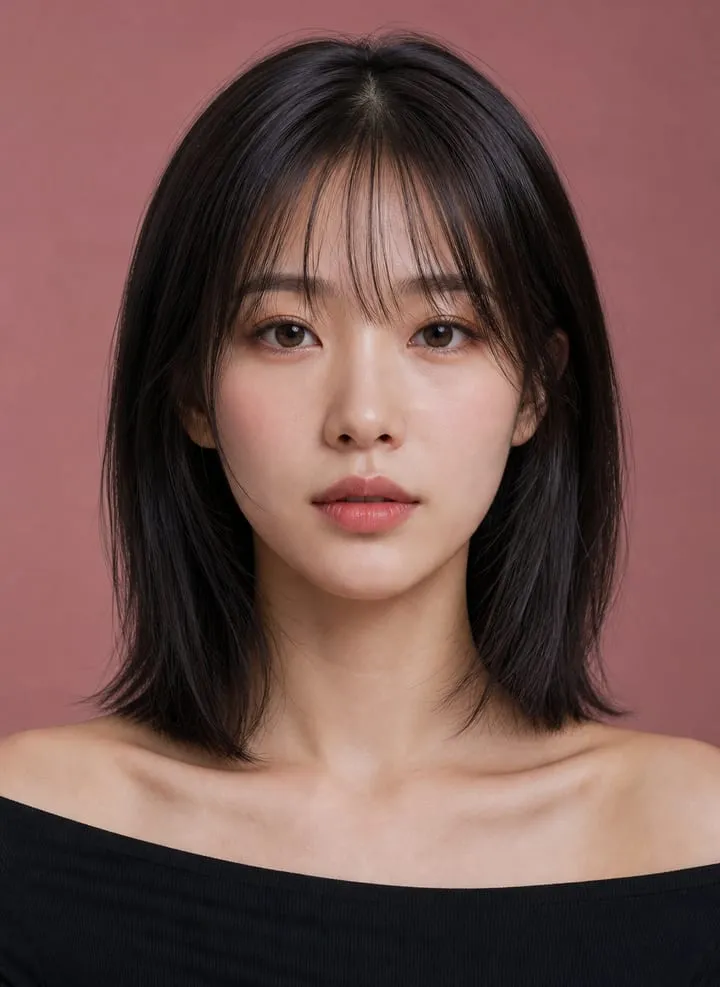
Try whisper fringe on your face →
The honest morning: A tiny section dries quickly, but it also separates quickly. A clean fringe, a small amount of dry shampoo at the roots, and fingers instead of heavy product usually keep the effect light.
The best starting hair: Fine or medium-density hair, or anyone unwilling to surrender a large front section. If the hair is very thick, “whisper” depends more on section size than on aggressive thinning.
The escape route: Sweep it to either side. At longer lengths it becomes nearly indistinguishable from the front of a layered cut, similar to a wispy fringe with long layers.
Say this in the chair: “Take a shallow section and leave space between the strands. I want the forehead to remain visible and the corners long enough to sweep away.”
Customized curtain bangs: the established trend gets more personal
Curtain bangs are not disappearing in 2026; they are becoming less copy-and-paste. The updated version may be fuller, shorter through the center, asymmetric around a cowlick, or cut to follow a natural wave. What defines it is the opening at the center and the outward sweep into longer layers.
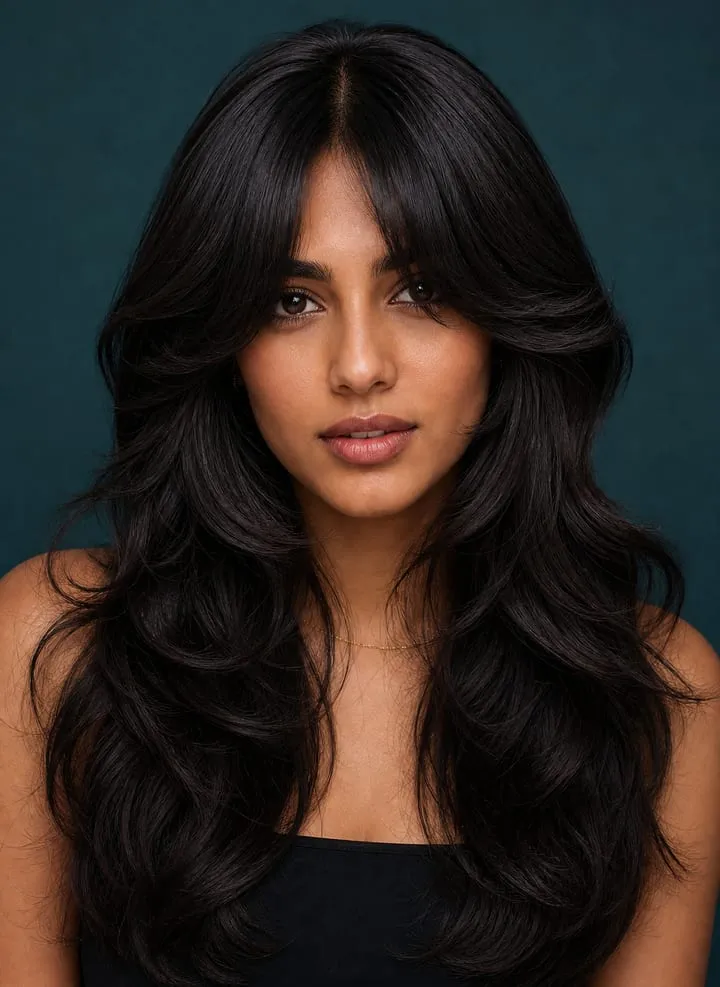
Try curtain bangs on your face →
The honest morning: These are forgiving once they reach the cheekbones, but freshly cut curtain bangs often need root direction. Dry the left half toward the right and the right half toward the left, then let both fall back into their natural split. That keeps the opening soft instead of creating two stiff wings.
The best starting hair: Almost any density with enough front length to form a sweep. Wavy and curly versions should be designed around the dry pattern rather than forced into a smooth blowout.
The escape route: This is the easiest grow-out of the seven. Widen the center opening, move the part slightly, and the fringe gradually becomes face framing.
Say this in the chair: “Show me where the shortest center pieces and longest corners will land when dry. I want a soft opening, not two disconnected curls, and enough length to tuck the sides.”
Piecey bangs: deliberately imperfect separation
Piecey bangs sit closer to the classic fringe line than cloud or whisper bangs, but they are broken into visible sections rather than cut as one dense sheet. The gaps and feathered tips make them feel relaxed, especially with a shag, lob, or softly layered mid-length cut.
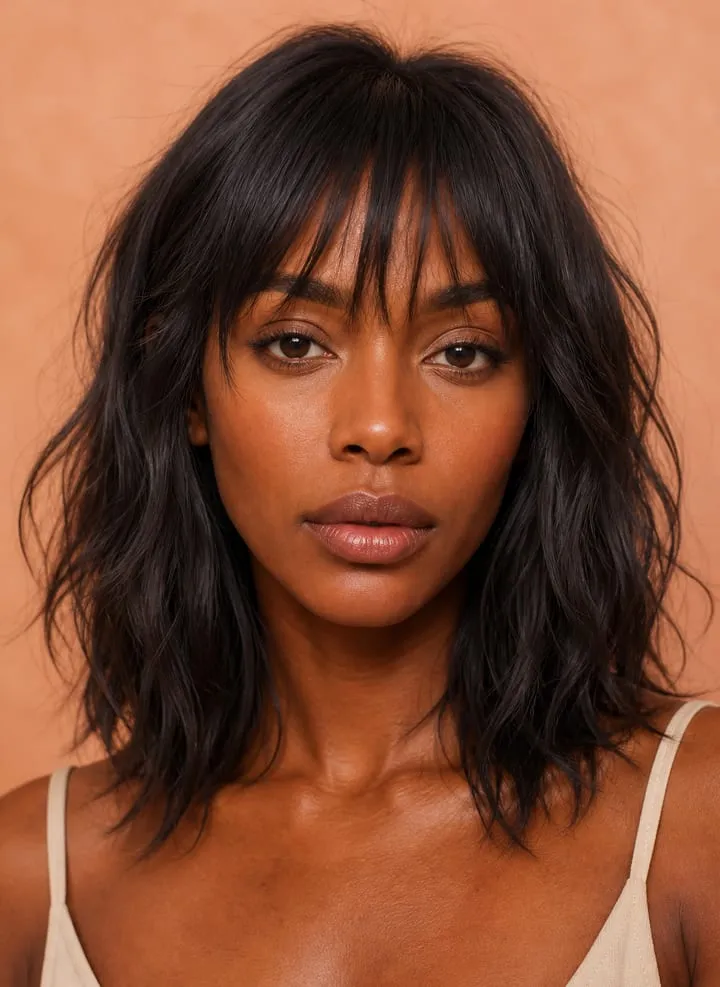
Try piecey bangs on your face →
The honest morning: The difference between piecey and stringy is clean roots plus controlled separation. Rub a trace of lightweight styling cream between your fingertips and touch only the ends. Coating the whole fringe collapses it.
The best starting hair: Straight, wavy, or loosely curly hair with enough density to create sections while preserving small openings. This fringe pairs naturally with a modern shag because both rely on broken edges and movement.
The escape route: Sweep the pieces diagonally or split them loosely. The irregular edge is less conspicuous during the first stage of growth than a perfectly blunt line.
Say this in the chair: “I want an eyebrow-length fringe with soft point-cut separation and slightly longer corners. Keep it airy, but not so sparse that it disappears.”
Side-swept bangs: the Y2K return, edited for real life
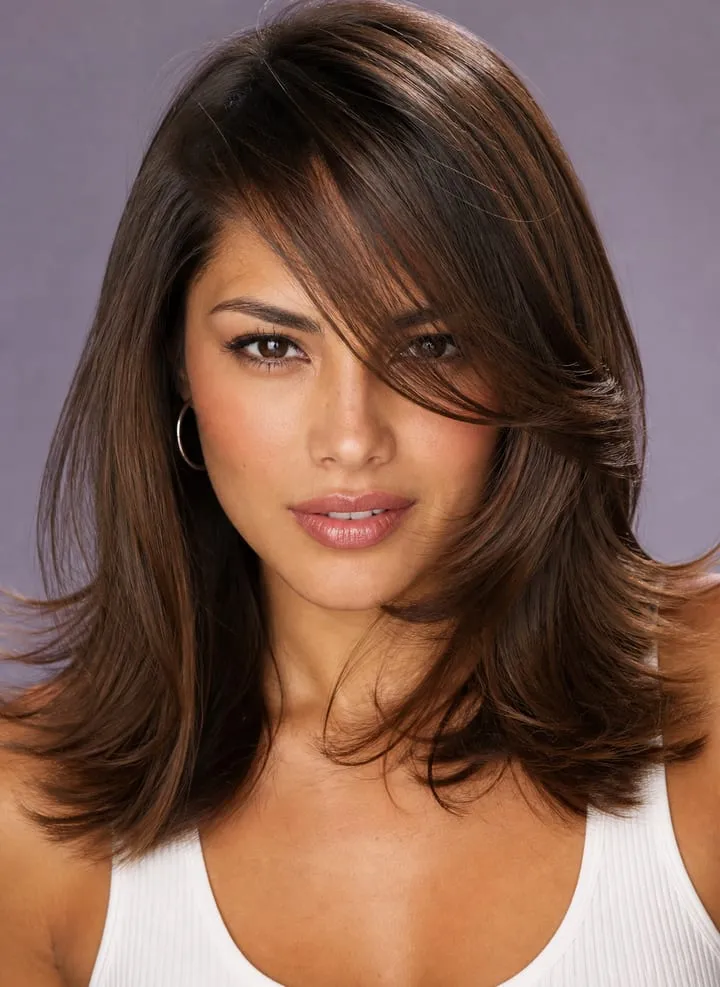
The 2026 side fringe borrows the drama of the early 2000s without hiding half the face. It begins at a side or off-center part, crosses the forehead diagonally, and blends near the cheekbone. The modern finish is lighter, more movable, and less lacquered.
Try side-swept bangs on your face →
The honest morning: A side sweep succeeds or fails at the root. Dry it briefly in the opposite direction first, then guide it across. That prevents the section from lying flat against the forehead. A sleek side-bang style is the polished version; an airier finish feels more current day to day.
The best starting hair: Straight, wavy, or stretched curly hair with a cooperative side direction. A strong center part can still wear it, but expect more morning persuasion.
The escape route: Tuck it behind the ear, pin it into an updo, or let it become the shortest layer in a side-parted cut.
Say this in the chair: “I want a long diagonal fringe that begins at my natural side part, keeps both eyes visible, and blends around the cheekbone rather than ending as a separate chunk.”
Micro bangs: the deliberate high-commitment cut
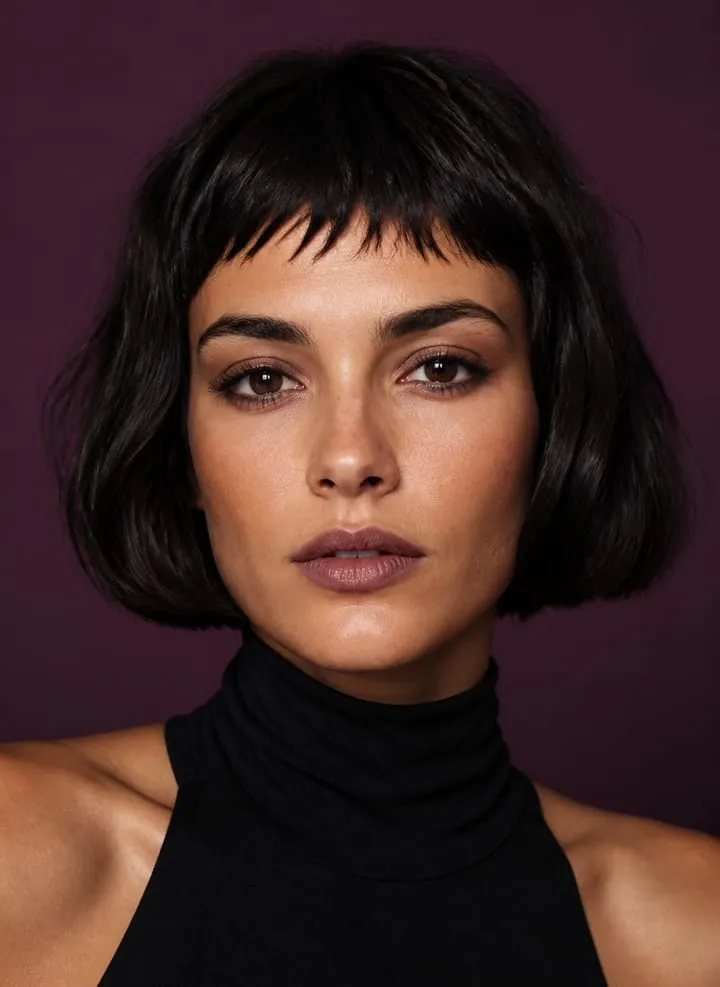
Micro bangs end clearly above the eyebrows. They can be blunt, curved, or textured, but they never pretend to be accidental. Paired with a bob, pixie, shag, or long lengths, the short line changes the entire mood of the haircut and puts the brows and upper face on display.
Try micro bangs on your face →
The honest morning: The daily styling can be quick because the fringe is short. The commitment comes from precision and grow-out. A small change in length is visible, and there will be a stage when the pieces are neither micro nor long enough to sweep comfortably.
The best starting hair: Anyone who wants the fringe to be the point of the haircut and is comfortable scheduling shape-ups. Cowlicks and strong bends do not make micro bangs impossible, but they must be incorporated deliberately instead of discovered after cutting.
The escape route: There is no invisible one. Texture the fringe as it lengthens, then transition through a short piecey bang. Choose this style because you enjoy the graphic line, not because it appears “easy.”
Say this in the chair: “Start longer than the final line and check it dry. I want textured micro bangs above the brows with an irregular edge—not a heavy bowl-cut fringe.”
Curly bangs: let the pattern design the edge
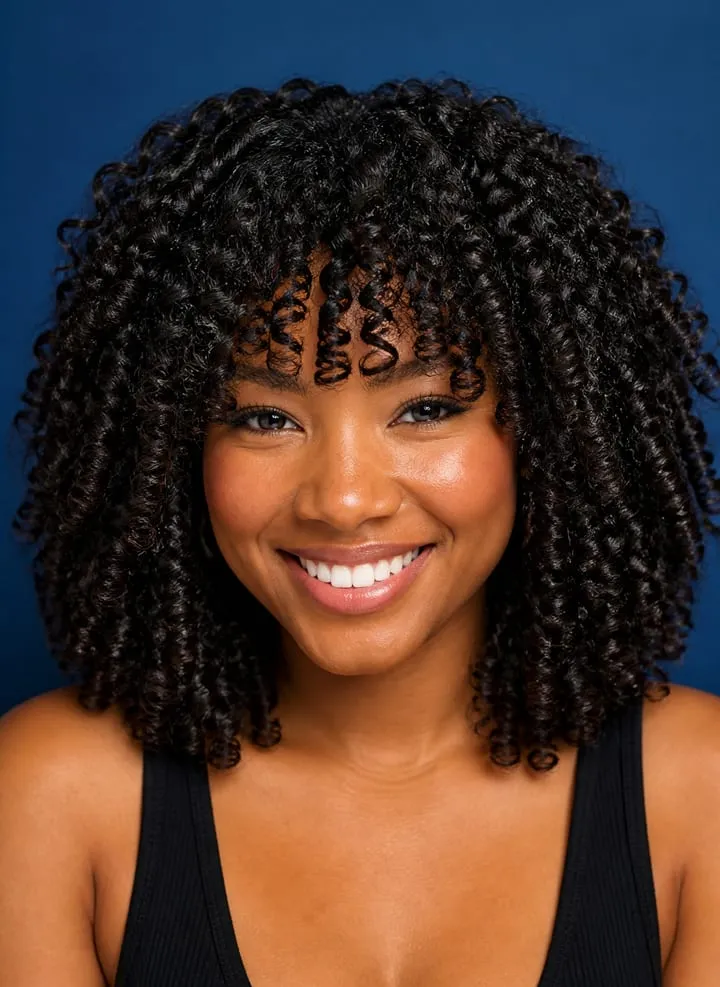
Curly bangs are not straight bangs translated curl by curl. They are a small front silhouette whose length changes with spring, humidity, wash day, and styling. In 2026, the strongest versions keep that variation visible: some curls hover above the brows, others fall lower, and the sides join the overall shape instead of forming a separate shelf.
Try curly bangs on your face →
The honest morning: Refresh the fringe as curls, not as a straight line. Mist only where needed, apply a small amount of your usual curl product, reshape individual springs, and let them settle before judging the length.
The best starting hair: Wavy, curly, or coily hair worn in its natural pattern often enough for the cut to be designed around it. If you alternate between natural and stretched styles, tell the stylist before the first snip.
The escape route: Let the fringe join short crown and temple layers, or redirect it into a side part. A rounded cut or twist-out gives growing curls somewhere intentional to go.
Say this in the chair: “Please shape the fringe with my curls dry and settled, leave room for spring and humidity, and connect the side curls into the overall silhouette.”
The no-regret bangs test
Before booking the cut, run the same experiment with three genuinely different options: one sparse, one medium, and one bold. For example, compare whisper fringe, curtain bangs, and micro bangs—not three nearly identical versions of curtain bangs.
Use one straight-on selfie in even light and keep the hair color, length, and expression consistent. Try the hairstyles on your own face so you are evaluating the fringe rather than being distracted by a different model, pose, or makeup look. Then check each result at full size and as a small phone thumbnail. Bangs change where attention lands even when the rest of the haircut stays the same.
Next, test the physical experience. Wear a clip-in fringe if you have one, or fold and pin a front section for an hour. Put on your usual glasses. Tie your hair back. Look down at your laptop. Take a short walk. The purpose is not to fake a perfect haircut; it is to notice whether forehead contact and front-heavy hair bother you.
Finally, choose your failure mode:
- If you would rather risk the fringe looking too subtle, choose whisper or cloud bangs.
- If you would rather spend a few minutes styling than lose the visual effect, choose curtain, piecey, or side-swept bangs.
- If you would rather make a strong statement and tolerate an obvious grow-out, choose micro bangs.
- If preserving your natural pattern matters most, choose curly bangs and let the springs set the edge.
Bring a fringe brief, not one inspiration photo
Save one photo of the finish you love and one photo showing the density you can realistically maintain. Then tell the stylist:
“I want the fringe to feel [airy, polished, separated, graphic, or curl-defined]. I spend about [number] minutes on my hair in the morning. Please check my natural part and growth pattern while the hair is dry, show me how much hair will enter the fringe section, and explain what it becomes as it grows.”
Also say whether you air-dry, straighten, exercise frequently, wear glasses, or switch between natural and stretched texture. Those details determine more than the trend name.
The best bang trend is not the one that looks most dramatic in a saved photo. It is the one whose styling, touch, and grow-out still make sense after the novelty wears off. If you can picture both the salon reveal and the six-weeks-later version—and you like both—you are probably ready for the cut.
FAQs
- Should I get bangs if I have never had them before?
- Start with a lower-commitment fringe such as whisper bangs, long curtain bangs, or a side-swept fringe. These leave enough length to split, sweep, or pin away while you learn how your hairline behaves. Preview the change first and ask your stylist to begin longer than the final target.
- Which bangs are trending in 2026?
- The major 2026 directions range from soft to graphic: cloud bangs, whisper fringe, fuller customized curtain bangs, piecey fringe, side-swept bangs, micro bangs, and natural curly bangs. The shared idea is movement and personalization rather than one rigid fringe copied onto everyone.
- What are the lowest-maintenance bangs?
- Long curtain bangs and side-swept bangs are usually the easiest to live with because they can blend into face-framing layers as they grow. Whisper fringe is also low commitment, although a sparse fringe can need a quick reset after sleeping. Any fringe is easier when its direction follows your natural hairline.
- How do I know whether bangs will work with a cowlick?
- Let your stylist examine your hair dry and in its natural part before cutting. A cowlick does not automatically rule out bangs, but it may decide the best direction, width, and density. Longer curtain or side-swept bangs are generally more forgiving than a short, perfectly straight line.
- Should curly bangs be cut wet or dry?
- The final length and silhouette should be checked with the curls dry and naturally settled because every curl springs up differently. A stylist may perform part of the technical cut damp, but the fringe should not be judged only while stretched or wet.
- How can I try bangs without cutting my hair?
- Preview several fringe densities on the same straight-on selfie, try a clip-in fringe, or temporarily fold and pin a front section to approximate the line. Compare the result with your hair down, tied back, and while wearing your usual glasses before committing.