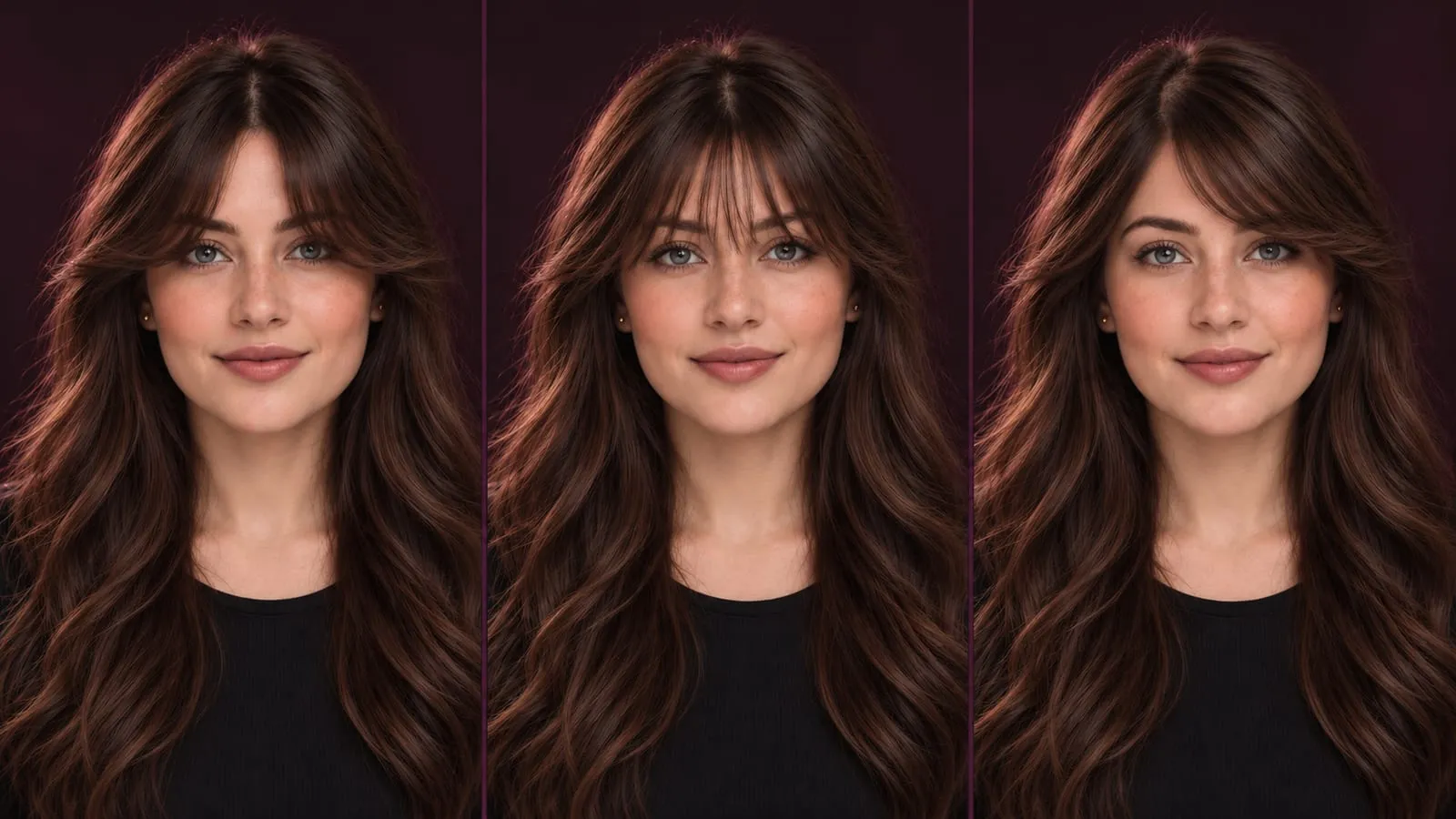
What Would I Look Like With Short Hair? Preview a Bob, Lob, or Pixie
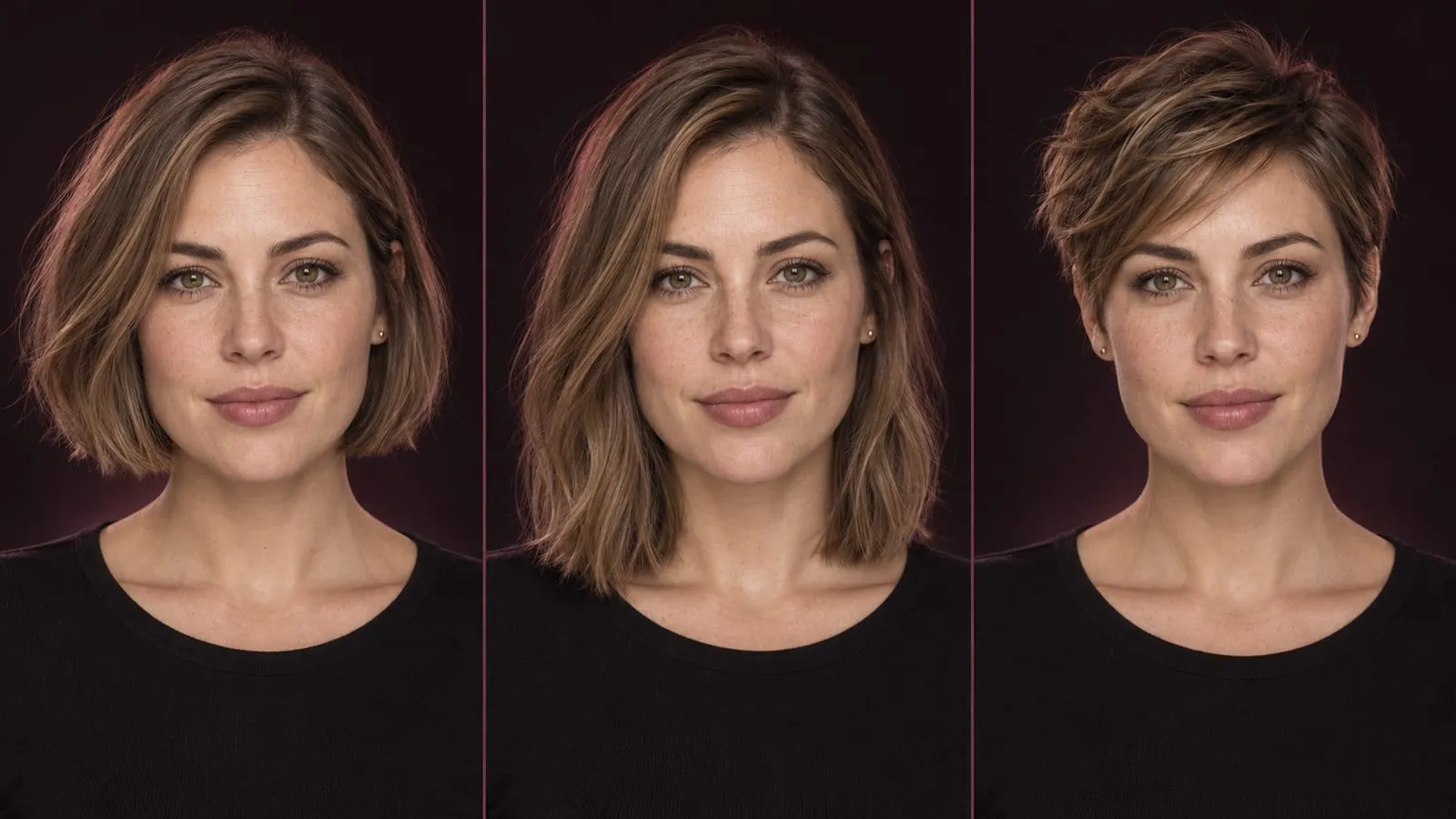
What would I look like with short hair? Start by comparing three different lengths on the same photo of yourself: a chin-length bob for a defined frame around the jaw, a collarbone lob for a shorter cut with more length remaining, and a pixie for an open view of your face and neck. A virtual short-hair try-on helps you see which outline you prefer before you book a haircut.
The useful question is more specific than whether you can “pull off” short hair. Where do you want the ends to land? How much of your face do you like exposed? And will you enjoy the cut when you style it yourself?
This guide walks through those comparisons, a photo-preview method, and a salon checklist. Where possible, keep your current color while testing the length, so a dramatic shade change does not decide the haircut for you.
Jump to: bob, lob, or pixie · face shape · your hair texture · the photo preview · the temporary test · the salon checklist.
Bob, lob, or pixie? Compare the lengths
These three shapes give you a useful spread of options. Start with a simple version of each, then explore bangs, stronger layers, or a different part after choosing your preferred length.
For more variations within these lengths, browse our guide to trending haircuts for women in 2026, including the lob, Italian bob, and bixie. Use those references to refine the shape after comparing the three lengths below.
| Cut | Typical outline | Check first |
|---|---|---|
| Bob | Ends near the jaw or chin | Where the edge frames your face |
| Lob | Ends near shoulders or collarbone | What can still tuck or tie back |
| Pixie | Short sides and nape; shaped top | How much face and neck you like exposed |
The boundaries overlap: one salon’s long bob can be another salon’s short lob. L’Oréal Paris’s bob and lob guide uses the jawline versus shoulder or collarbone distinction. For your appointment, point to the actual length you want when dry instead of relying on the name alone.
The cover and matching portraits are AI-generated editorial style illustrations of one model. They illustrate haircut differences and are not in-app results or a prediction of your own haircut.
The bob: a clear frame around your jaw
A chin-length bob brings the ends into the same space as your lower face. A softly blunt version creates a visible edge; a curved or lightly textured version changes how that edge meets your cheeks and jaw. Our Italian bob guide shows another interpretation of this shorter shape.
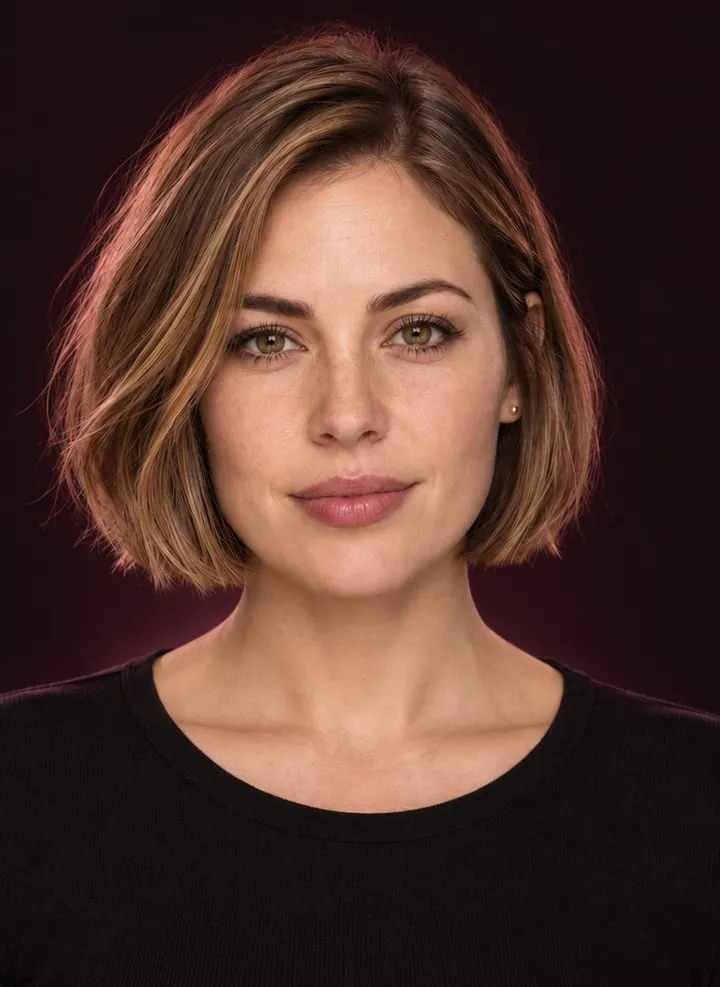
Preview a chin-length bob on your face →
In the preview: compare an edge at your chin with one slightly below it. Look at the whole outline, including the width beside your cheeks. You may love a strong horizontal line or prefer softer ends; neither requires changing your face shape.
In everyday life: ask what happens when you tuck one side, put on glasses, or let the cut air-dry. A bob that looks smooth in a reference may need a blow-dry to hold that finish. Very short front pieces may also escape a tie or clip.
Salon brief: “I like this bob’s outline. Please show me where it will finish at my chin when dry, and how much styling it needs with my natural texture.”
The lob: try shorter hair while keeping more length
A lob, or long bob, moves the baseline toward the shoulders or collarbone. It is a useful first comparison if you want a visible change but still value some of the ways you wear longer hair.
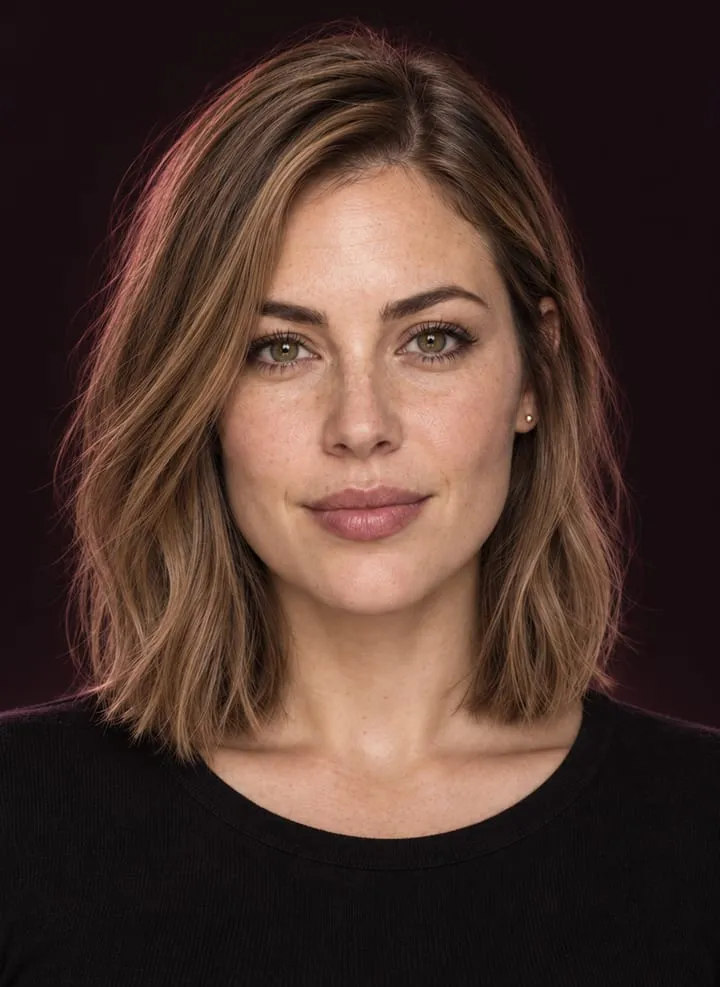
Preview a collarbone lob on your face →
In the preview: check the space between your jaw and the ends. Does that extra length give you the frame you want, or do you prefer the bob’s clearer separation from your shoulders? Compare a gentle natural bend with a straighter finish if both reflect how you wear your hair.
In everyday life: do not assume every lob makes a ponytail. Ask whether the front pieces and layers will reach, and whether the ends will sit on your shoulders and turn outward. That movement can be part of the look if you like it.
Salon brief: “I want the ends around my collarbone when dry. Keeping enough length for my usual tie-back matters to me, so please check the front and layers before cutting.”
The pixie: see your features with less hair around them
A pixie removes most of the length at the sides and nape while using the top and fringe to create direction. The result can be soft, textured, sleek, or closely cropped. If you want more front length, compare a long pixie as a separate option.
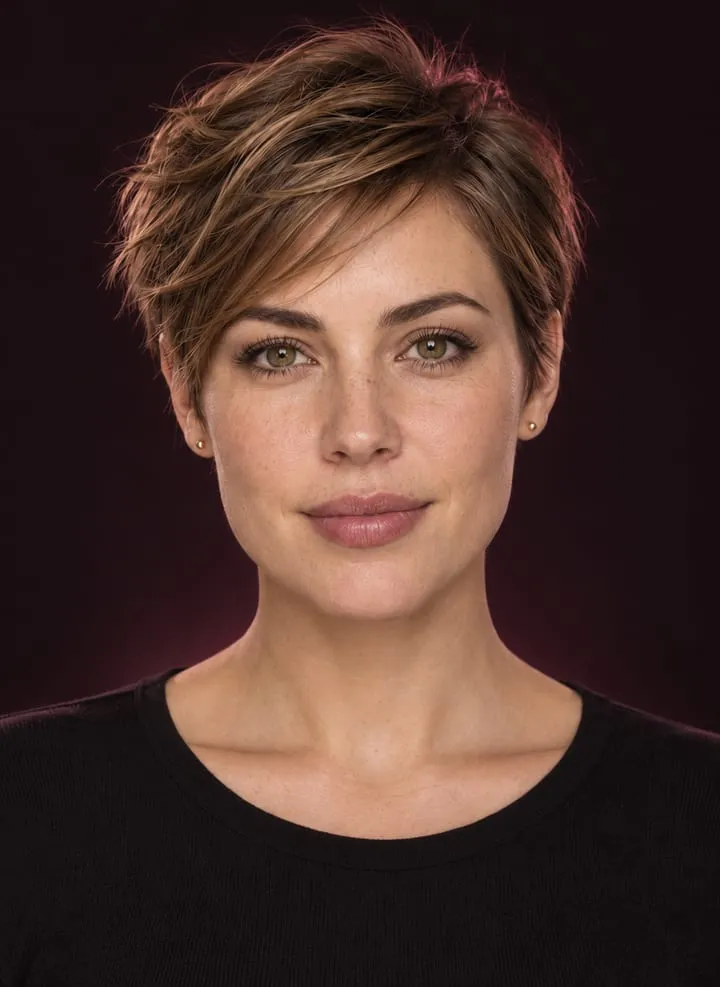
Preview a pixie on your face →
In the preview: look at your ears, hairline, neck, and the balance between the top and sides. A pixie with a longer sweep is a different choice from a short forward fringe, even though both are called pixies. Save the version you actually like.
In everyday life: less hair does not automatically mean less upkeep. You may spend less time drying it and more time resetting the crown or maintaining the outline around your ears. Ask to see a back and side reference, because one front-facing preview cannot show the whole cut.
Salon brief: “I like the short sides and soft top in this pixie. Please check my crown and nape growth patterns, show me the ear coverage, and explain the reshaping schedule.”
Would short hair suit my face shape?
Use face shape to choose comparisons, rather than to give yourself permission to go short. The position of the ends, the part, the fringe, and the amount of volume can change the frame within any of these haircuts.
- Want to emphasize your jaw? Compare a bob ending close to it with a lob that leaves more space below. Notice which edge you prefer.
- Want more of your cheeks visible? Try tucked sides or a pixie, then compare them with hair falling beside your face.
- Want a softer outline? Compare rounded ends or a natural wave with a straight, blunt edge at the same length.
- Want less height or more width? Look at the silhouette around the crown and temples. Judge that separately from how short the nape is.
Round, square, oval, heart-shaped, and longer faces can all be starting points for short-hair experiments. If you want help describing your proportions, our guide to checking your face shape from a photo shows which reference points to compare. Your favorite preview should still look like you; a narrower jaw or enlarged eyes in a generated image do not tell you whether you like the haircut.
Keep bangs as a second decision where possible. Once you have a favorite length, our guide to trying curtain, wispy, and side-swept bangs can help you compare forehead coverage without changing everything at once.
Check your texture, density, and growth patterns
The same outline can require different cutting and styling on different heads of hair. Before choosing a favorite, check these details against how your hair normally behaves.
Fine or low-density hair: look at the substance of the ends, not just the lift at the roots. Fine describes strand diameter; low density describes how much hair you have. A preview that adds lots of hair can hide that distinction. Ask how the proposed layers affect your perimeter; our guide to haircuts for fine hair explains the options.
Thick hair: look at width as well as length. Ask how the stylist would manage internal weight while preserving the outline you like. Copying the length of a fine-haired model may give you a very different silhouette.
Wavy hair: notice where your bends usually begin and how the ends behave without heat styling. Compare a reference with a similar wave pattern, rather than assuming the smooth preview is an air-dried result.
Curly or coily hair: choose a reference with similar curl size and density, and discuss the length when dry and settled. Hair.com’s explanation of shrinkage describes why curls can appear shorter than their stretched length. A straight bob filter cannot establish where your own curls will finish after a cut.
Cowlicks and hairlines: show your stylist your natural crown, part, and nape before deciding on a pixie or a very short bob. AI can draw hair into a position that your real growth direction will not hold without styling.
How to preview short hair on your own photo
Use the preview to narrow the choice to two cuts. Keep the experiment simple enough that you know what made you prefer one image.
1. Take a clear baseline selfie
Face a window in even light, hold the camera at eye level, and keep your expression relaxed. Move your hair away from your cheeks so your face and hairline are visible. Include the top of your head, neck, and shoulders so you can judge a bob against a collarbone-length lob. Skip beauty filters.
Save the original. You will need it to check whether the tool changes your facial features as well as your hair.
2. Compare one bob, one lob, and one pixie
In Get The Look, upload your selfie and choose hairstyle options representing each length. Full try-on access is part of the app’s premium plan. The photo try-on walkthrough explains the broader process; our hairstyle app comparison can help if you are still choosing a tool.
Use your current color and a similar texture wherever available. If a result adds blonde highlights, dense curls, or a dramatic fringe, label that as an extra change. You are trying to learn whether you like the length, not whether you like an entirely different makeover.
Once you have a favorite length, use our guide to previewing hair colors on your photo to explore a new shade while keeping that haircut consistent.
3. Check that the result is useful
Put the original beside each preview. Check your eyes, brows, nose, jaw, skin, and expression. Set aside results that substantially change your features, hide an ear strangely, or leave remnants of long hair behind the new cut.
Then compare at two sizes: a full image to inspect the hairline and ends, and a small thumbnail to judge the overall outline. A polished close-up can distract from a shape you would not choose in an everyday photo.
4. Score the look and the routine separately
For each cut, write yes, maybe, or no next to these questions:
- Do I like where the hair ends around my face and neck?
- Does the image keep my real features and plausible hair density?
- Would I like the cut with my usual texture and styling effort?
- Can I manage workouts, glasses, sleep, and getting ready with this length?
- Am I comfortable with the salon visits and grow-out plan?
The preview can help with the first two. Mark anything about real-world behavior for your stylist to confirm. Save the best two options with a short note about what you like, such as “clear jawline” or “long enough to clip back.”
Try a temporary short-hair test
If your hair is long enough, loosely tuck the ends underneath and pin them to approximate a bob. Keep the pins comfortable and look from the front and side. This can help you notice how you feel with more neck exposed, but the folded hair adds bulk and does not reproduce a cut bob’s movement.
A bob or pixie wig can give you another physical comparison. Check the outline with your usual glasses and clothes, and turn your head instead of judging one mirror pose. Wig density, fit, and hairline can differ from your own, so use the experience to identify preferences rather than to forecast an exact result.
For a pixie, simply tying your hair back will not imitate the crown shape or short sides. Pair the photo preview with good front, side, and back haircut references for the consultation.
What to ask your stylist before going short
Bring your unfiltered baseline, two favorite previews, and a reference showing hair texture close to your own. Be specific about the detail you want to keep: the bob’s edge, the lob’s length, or the pixie’s open sides and soft top.
Ask your stylist to confirm:
- Dry length: where the ends or shortest pieces will sit with your normal texture.
- Front and back: ear coverage, nape shape, and whether the front can tuck or tie back.
- Layers and density: how much hair stays at the perimeter and where weight is removed.
- Daily styling: what you need to do after washing and on the next morning.
- Maintenance: the reshaping schedule, appointment cost, and what happens as it grows.
You can use this brief:
“I like this [bob, lob, or pixie] because of the shape around my [jaw, cheeks, or neck]. I normally wear my hair [air-dried, blown out, wavy, or curly], and I spend about [your usual time] styling it. Please show me the length when dry and explain what it will take to keep this outline.”
If you like two lengths equally, discuss starting with the longer one and reassessing after you have worn it. That adds an appointment if you later go shorter, but it gives you experience with your own hair between decisions. Choose a cut you want to wear on an ordinary day, with a clear plan for making it work.
FAQs
- How can I see what I would look like with short hair without cutting it?
- Use the same clear, eye-level selfie to preview a chin-length bob, collarbone lob, and pixie in a virtual hairstyle tool. Keep the color and texture close to your own and compare each result with the original photo. A tucked-under faux bob or a wig can also help you test the outline before a stylist checks how the cut would work with your real hair.
- What is the difference between a bob and a lob?
- A bob usually finishes around the jaw or chin, while a lob is a long bob that reaches toward the shoulders or collarbone. The exact names vary, so show your stylist the intended dry length on your own body. A collarbone lob may retain more tie-back options, depending on the length of its front pieces and layers.
- Can short hair suit a round face?
- Yes. A round face does not rule out a bob or pixie. Compare where a bob ends relative to your cheeks and jaw, then try different parts and amounts of crown volume. Choose the frame you enjoy on your own photo instead of assuming that one face-shape label determines your shortest possible haircut.
- Can I preview short hair if my hair is curly or coily?
- Yes, but choose examples with a curl pattern and density close to your own. A smooth bob preview does not tell you where your curls will sit when dry. Bring an unfiltered photo of your normal wash-day result to the consultation and ask the stylist to account for shrinkage, volume, and the way you usually style your hair.
- Is a pixie easier to maintain than a bob or lob?
- It depends on your growth patterns and preferred finish. A pixie can use less drying time but may need more frequent reshaping around the ears and nape. A bob can need regular styling to keep a precise edge, while a lob may allow more tie-back options. Compare daily effort and salon visits separately before choosing.
- How accurate is an AI short-hair filter?
- An AI preview can help you compare length and the outline around your face. It cannot guarantee your actual density, curl shrinkage, cowlick behavior, or how the back of the cut will sit. Check for changes to your face and discard misleading results. Use your favorites as consultation references, with a stylist confirming the cut and styling required.