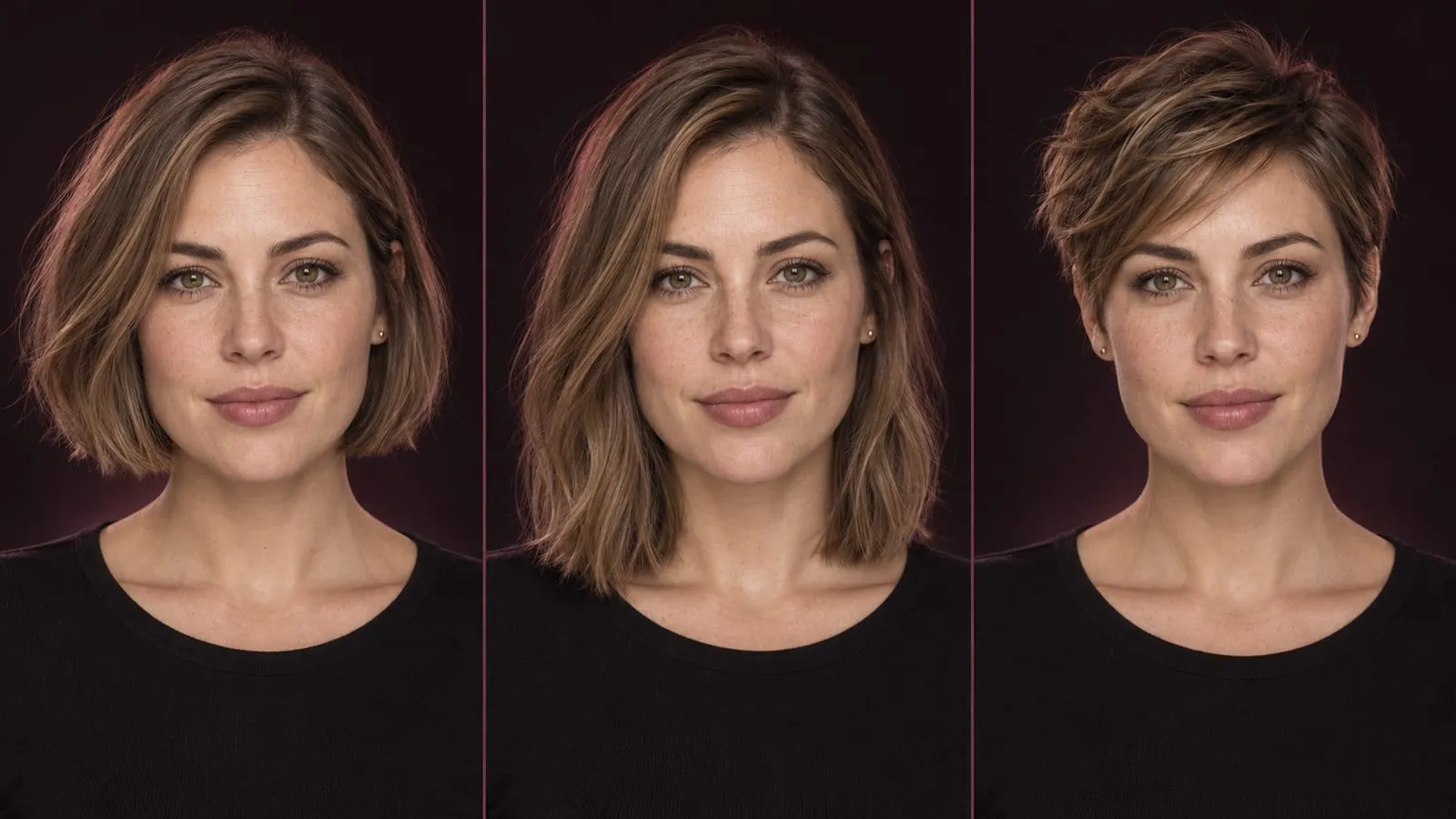
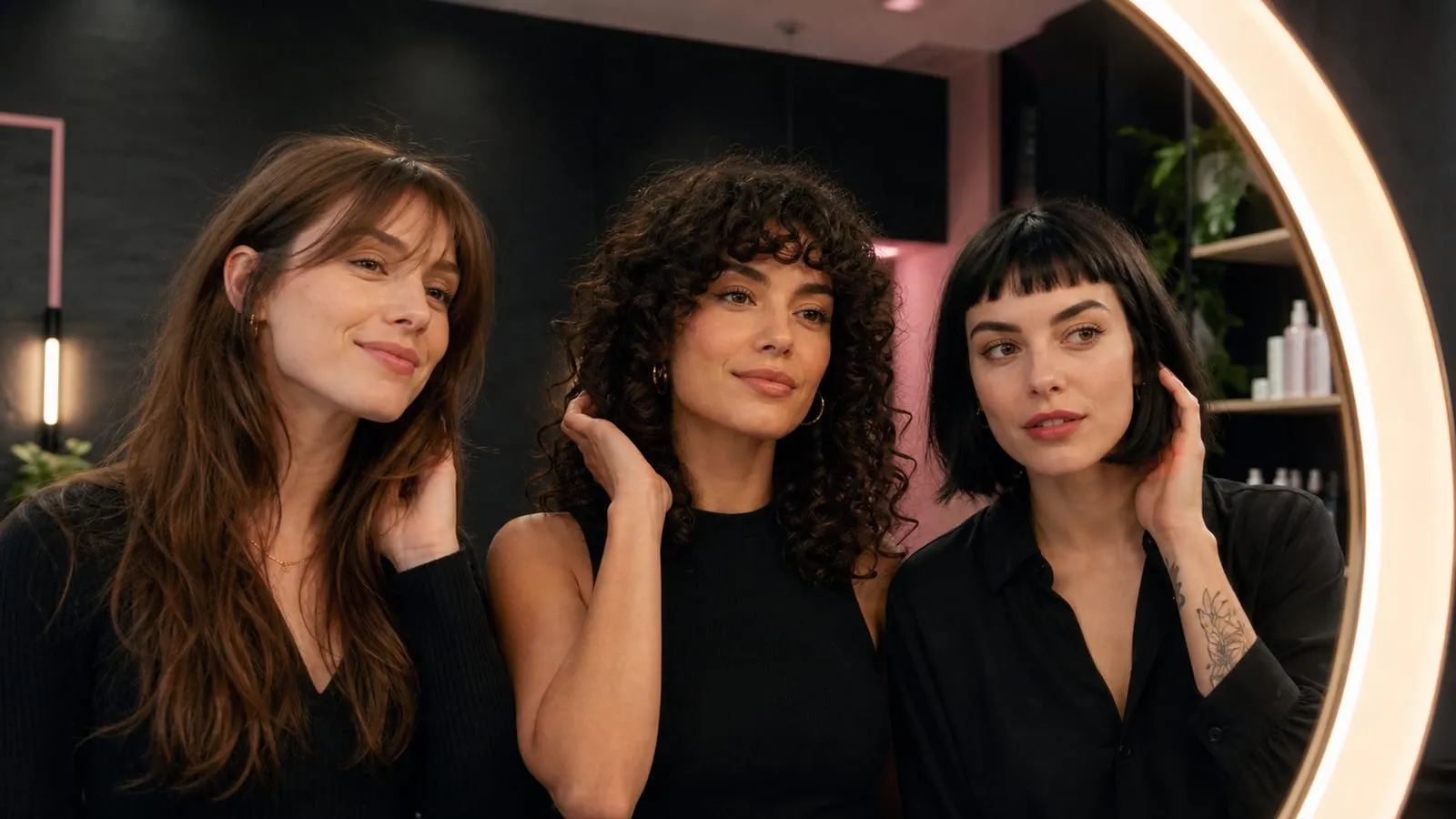
Which Bangs Suit Your Face Shape? Curtain vs. Wispy
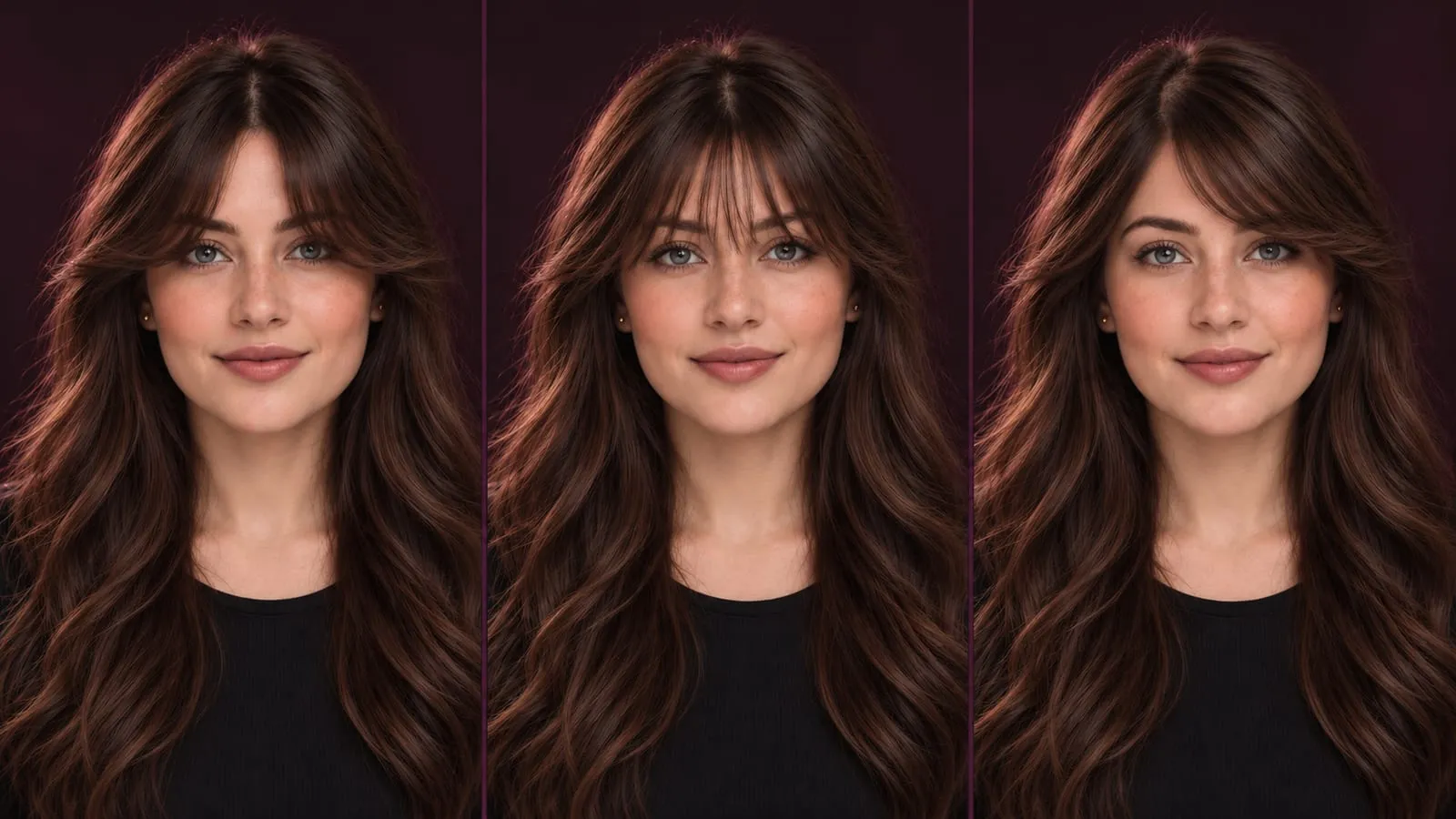
Would bangs suit me? The most useful answer comes from comparing the right fringe shapes on your own face. Start with curtain bangs for an open, face-framing effect, wispy bangs for light forehead coverage, and side-swept bangs for a diagonal line. Then check whether your hairline, texture, and daily routine can support the version you like.
A fringe changes the space around your eyes and forehead even when you keep the rest of your hair long. That is why liking bangs on someone else does not always tell you which ones you will enjoy wearing. A small change in the shortest piece, section size, or part can make the same idea feel completely different.
This guide helps you try bangs without cutting your hair, compare the three shapes fairly, and take a useful reference to your stylist. For a wider look at fringe styles, see our separate guide to bangs trends and their upkeep.
Jump to: the three styles · face shape · the photo try-on · the salon checklist.
Curtain, wispy, or side-swept bangs? Compare the difference
Start with the amount of forehead you want to show and the direction you already wear your hair. You do not need to change your hair color or choose a completely new haircut to test a fringe.
| Bang style | What it changes | Check in your preview |
|---|---|---|
| Curtain | An open center and longer sides | Where the corners meet your cheeks |
| Wispy | Light, separated forehead coverage | Density and clearance around your eyes |
| Side-swept | A diagonal line across the forehead | Part direction and eye clearance |
These names describe different things: curtain describes the shape, side-swept the direction, and wispy the light density and soft finish. You can ask for wispy curtain bangs or a light side-swept fringe. Treat the three examples below as starting points, then adjust them to your hair.
The matching portraits and cover are AI-generated style illustrations. They show fringe differences on one model, rather than results from an in-app test or a prediction of your haircut.
Curtain bangs: try an open center and longer corners
Curtain bangs split near the center and sweep outward into longer face-framing pieces. They are worth trying if you like seeing some forehead, want to draw attention to your eyes and cheekbones, or prefer a fringe that can gradually blend into your front layers.
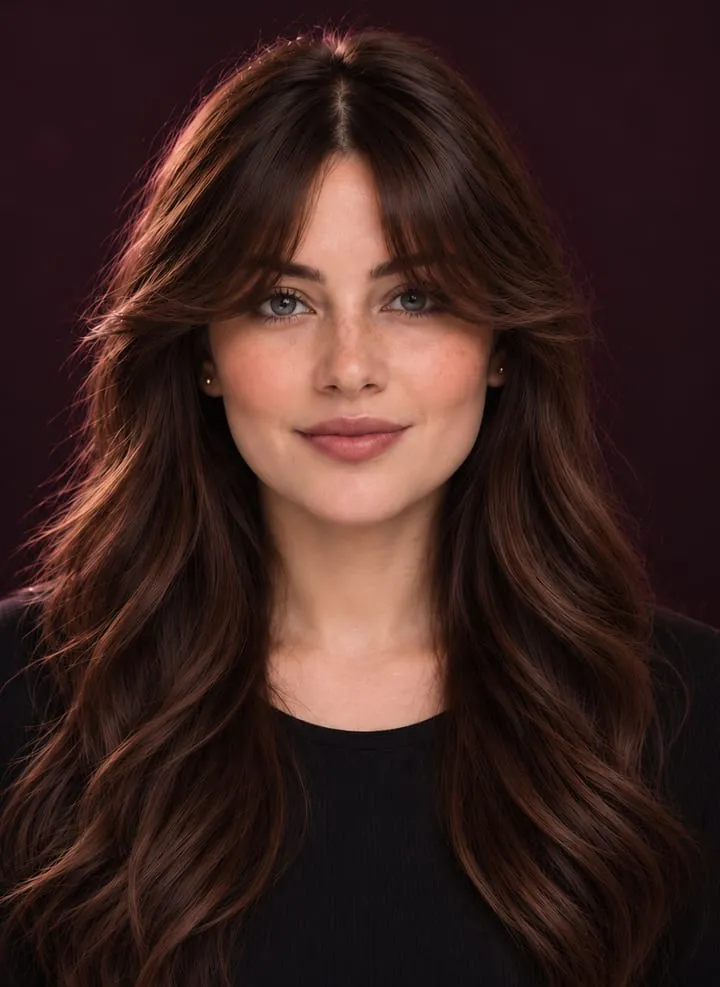
Try curtain bangs on your face →
Compare two lengths. In one preview, look for a shorter center around the brows; in another, try a longer, more open shape. Notice whether the side pieces stop at a feature you want to emphasize or cover more of your cheeks than you expected.
Check the styling behind the picture. A rounded, outward sweep usually reflects styling as well as the cut. If you air-dry, ask what the same fringe will look like in your natural texture. Long corners give you more room to sweep the fringe away, but they do not guarantee every piece will tuck behind your ears.
A useful salon request: “I want an open curtain shape connected to my existing layers. Please show me the shortest point and the cheekbone length on my own face before cutting.”
Wispy bangs: try light coverage without a solid line
Wispy bangs use fine, separated strands to soften the forehead while leaving skin visible. The ends often sit near the brows, with a feathered edge instead of one dense horizontal line. L’Oréal Paris’s wispy bangs guide also distinguishes this airy finish from a full blunt fringe. A wispy fringe with long layers shows one version that keeps the rest of the hair long.
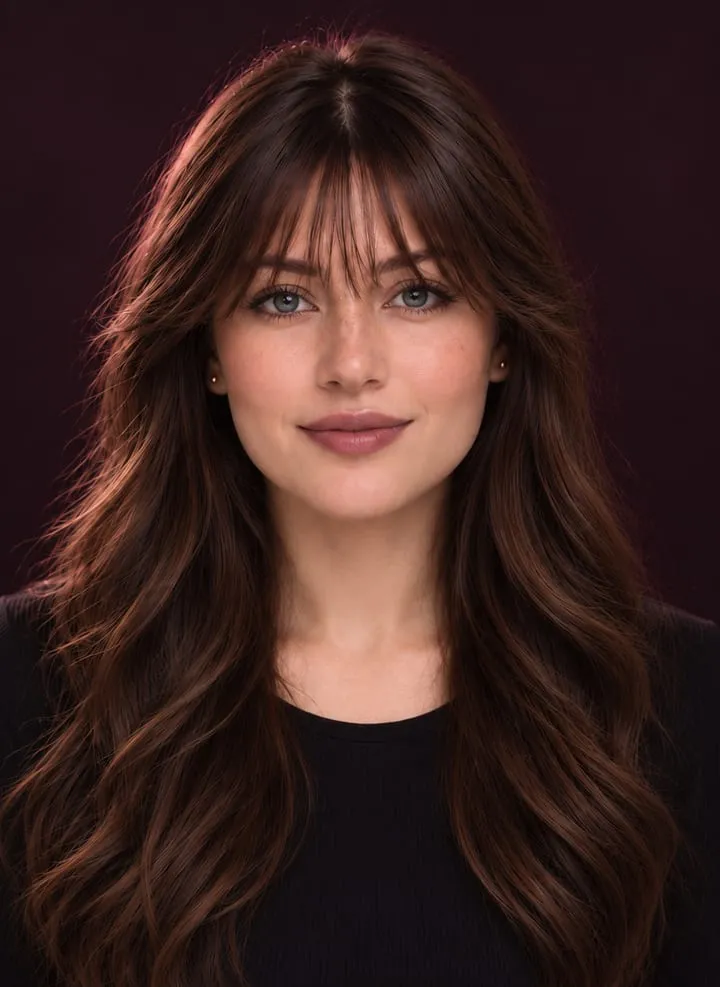
Try wispy bangs on your face →
Compare density before length. A few fine pieces and a fuller fringe can end at the same point yet frame your face very differently. Look at whether you like the light coverage when the image is small, as it will be in everyday photos, as well as when zoomed in.
Check how much hair the look requires. Fine strands do not necessarily mean low hair density, and a sparse hairline does not automatically become fuller because a preview adds fringe. If the front of your hair is already limited, ask how much can enter the bang section without weakening the surrounding haircut. Our guide to haircuts for fine hair explains why preserving density matters.
A useful salon request: “I want a light, see-through fringe with soft ends. Please keep the section conservative and check the coverage dry before making it fuller.”
Side-swept bangs: try a diagonal frame
Side-swept bangs cross the forehead from a side or off-center part and blend into longer hair on the opposite side. They are a useful comparison if you already favor a side part or want forehead coverage with an asymmetric shape. A sleek side-bang style shows one polished interpretation; your version can retain more natural bend.
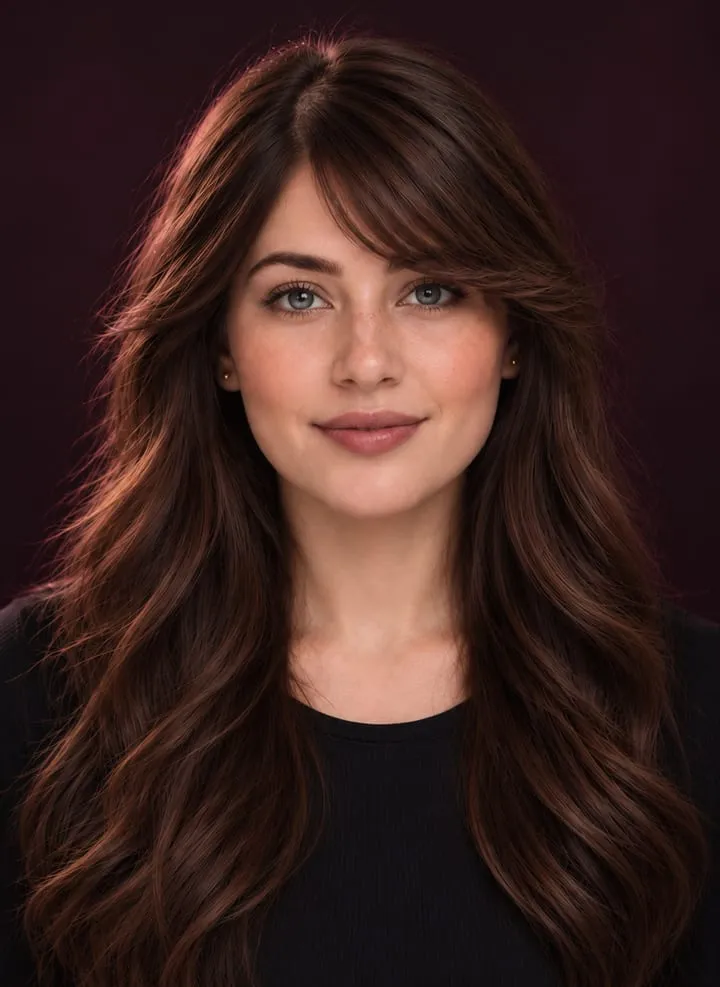
Try side-swept bangs on your face →
Compare the direction. Start on the side your hair naturally favors. If you also preview the opposite sweep, notice whether the image looks appealing because it changes the part or because it actually adds fringe. Longer front layers swept sideways can sometimes give you enough of the effect without a shorter bang section.
Check eye clearance. A dramatic sweep can look attractive in a still picture and become annoying when you read, drive, or look down. Keep a reference that shows where the shortest pieces finish, not only one where the hair has been brushed away from the eyes.
A useful salon request: “I want a soft diagonal fringe that follows my natural part, leaves my eyes clear, and connects to the side layers. Please show me how it falls without holding it in place.”
Which bangs suit my face shape?
Face shape is a way to choose what to compare, rather than a rule about who can wear bangs. Decide which effect you want: more forehead coverage, a clearer view of your cheeks, a softer frame, or a diagonal line.
| If your face is… | A useful first comparison | What to look at |
|---|---|---|
| Round | Longer curtain bangs and a side sweep | Whether the open center or diagonal gives you the visible length you want |
| Oval | All three, at similar overall hair lengths | Which amount of coverage you prefer around your eyes |
| Square | An airy fringe and softly curved curtain corners | Whether you like a soft, broken edge beside a defined jaw |
| Heart-shaped | Light curtain bangs and a side sweep | The balance between forehead coverage and the narrower lower face |
| Long or oblong | Wispy coverage and a less open curtain shape | Whether covering more of the forehead gives the proportions you prefer |
| Diamond | A side sweep and longer curtain corners | Where the fringe ends relative to the cheekbones |
These are visual starting points, consistent with the adjustable lengths and shapes in L’Oréal Paris’s bangs guide. They are not restrictions. If you like a shape outside the first comparison, try it too.
If you are unsure of your proportions, use our guide to finding your face shape from a clear photo before choosing which row to compare. Do not let finding a perfect label delay the more useful experiment: comparing the fringe on a clear photo of you.
What if I have a small forehead or wear glasses?
Look at the actual space between your hairline, eyebrows, and frames. A fringe copied at the same length as a model’s may sit differently on your face. Try less coverage, a narrower curtain opening, or a side sweep, then compare them with a light brow-skimming option.
Wear your usual glasses for a physical fringe test. Does the hair rest on the top rim? Does it get pushed upward when you adjust your frames? Can you look down without brushing it away? A front-facing preview can help with the outline, but it cannot answer those comfort questions.
Check your hair texture and hairline before choosing
A style can look right in a picture and still ask more of your morning than you want. Before choosing a favorite, check four things:
- Your natural part and cowlicks. Look at your hair when it is unstyled. A fringe that fights its growth direction can need regular resetting. Stylist educator Sam Villa demonstrates directional drying for fringe cowlicks, but styling does not permanently change the direction in which hair grows.
- Your front-section density. Ask how much hair will be brought forward. The aim is a workable fringe without taking more fullness from the rest of your cut than you want.
- Your natural wave or curl. Judge the proposed length with your texture dry and settled. A straight, smooth preview cannot establish where your own curls will spring up; have the stylist account for shrinkage and how you actually wear your hair.
- Your normal routine. Say whether you air-dry, use heat, tie your hair back, or wash after exercise. Choose the fringe you like in that routine, as well as in a styled reference photo.
If your preferred picture shows straighter, thicker, or more lifted hair than you normally have, save it with a note about what changed. That gives your stylist something specific to assess.
How to try bangs on your photo before cutting
Use a virtual bangs try-on to narrow the choice, then check the result against your real hair. Keeping the comparison consistent makes it much easier to tell whether you like the fringe itself.
1. Take one clear baseline photo
Face a window in even light and hold the camera at eye level. Keep your expression relaxed, skip beauty filters, and move your hair away from your forehead so the hairline is visible. Avoid a high camera angle that makes your forehead appear smaller.
Keep this original beside your previews. It is the reference for checking whether the tool changed your face as well as your hair.
2. Preview three genuinely different fringe shapes
In Get The Look, upload your selfie and compare hairstyle options that show a curtain opening, a light wispy fringe, and a side sweep. Full try-on access is part of the app’s premium plan. For the broader workflow, see how to try hairstyles on your face.
Choose examples with a similar color and overall length where available. A fringe attached to a short bob is a different comparison from the same fringe with long layers. If a preview changes the whole haircut, account for that instead of attributing every difference to the bangs.
If you are also considering going shorter, choose between a bob, lob, and pixie first, then compare fringe shapes at your preferred length so you can separate the two decisions.
If you are choosing between tools, our AI hairstyle and makeup app comparison explains their different approaches.
3. Check the result before picking a winner
For each preview, ask:
- Does it still look like me? Compare the eyes, brows, jaw, and expression with the original. Set aside an image that substantially changes your features.
- Do I like this amount of forehead coverage? Look at the full image and a small thumbnail. Zooming into a flattering detail can hide a silhouette you would not choose overall.
- Where are the shortest pieces and longest corners? Identify their position relative to your brows, eyes, cheeks, and glasses so you can explain what you like.
- Am I choosing the fringe or the styling? Separate the bang shape from extra volume, a fresh color, and a smooth blowout.
- Could I wear a less styled version? A preview does not establish your natural density, cowlick behavior, or drying time. Mark those questions for the salon.
Save your best two options alongside the original. Two clear alternatives make a more useful consultation than a folder of nearly identical pictures.
4. Test how forehead coverage feels
A clip-in fringe can help you check the physical experience: hair near your eyes, contact with your forehead, and how the shape works with glasses or tied-back hair. The color and fit may not perfectly match, so use it as a comfort test rather than an exact haircut forecast.
Without a clip-in, sweeping and pinning your existing front layers can approximate the direction of curtain or side-swept bangs. It will not reproduce a freshly cut fringe’s density or fall. Try ordinary movements—looking down, turning your head, and putting your hair up—before deciding that you want this coverage every day.
What to ask your stylist before cutting bangs
Bring the original photo, your two favorite previews, and a reference with hair texture close to your own. Explain the specific detail you like: the open center, visible gaps, a diagonal sweep, or where the corners meet your cheeks.
Then ask your stylist to confirm:
- Where the shortest piece will land when dry, including any curl shrinkage.
- How wide and deep the fringe section will be.
- How your natural part and cowlicks affect the shape.
- What the fringe will look like with your usual styling effort.
- How often your chosen length will need a trim, and how it can blend into layers as it grows.
You can use this brief:
“I like this [curtain, wispy, or side-swept] shape because of the coverage around my eyes and forehead. I usually wear my hair [air-dried, blown out, curly, or tied back]. Please check my natural hairline, start conservatively with length and density, and show me how I would style it at home.”
If two styles appeal equally, discuss which can adapt more easily to your natural part and grow into layers you already like. The photo comparison helps you choose the look; the consultation helps you choose a version you can enjoy wearing.
FAQs
- How can I see what I would look like with bangs before cutting my hair?
- Compare curtain, wispy, and side-swept bangs using the same clear, eye-level photo in a virtual hairstyle tool. Keep the overall length and color similar wherever possible, and check that the preview preserves your facial features. Then use a clip-in fringe to test how the coverage feels and ask a stylist whether your natural hair can hold the shape.
- What is the difference between curtain bangs and wispy bangs?
- Curtain describes the shape: the fringe opens near the center and becomes longer toward the sides. Wispy describes the density and finish: light strands with visible gaps and a soft edge. They can overlap, so wispy curtain bangs are a valid option if you want both an open center and an airy fringe.
- Would curtain bangs suit a round face?
- They can. Try a longer curtain shape that leaves an opening through the center and blends below the fullest part of the cheeks if you want more visible length. Compare that with a shorter version on your own photo; the fringe length and where the sides finish matter more than the face-shape label alone.
- Can bangs work with a small forehead?
- Yes, but check the space between your hairline, brows, and glasses before choosing the length. A narrow curtain opening or a light side sweep may give you the framing you want without covering the entire forehead. Ask your stylist to show where the shortest pieces will land when dry rather than copying a model’s fringe length.
- Which bangs should I try if I wear glasses?
- Try all three shapes with your usual frames. Look at whether the fringe rests on the top rim, hides your eyebrows more than you want, or falls into your eyes when you look down. Longer curtain corners and a side sweep can leave more space around the frames, while a wispy fringe can work if its length is adjusted to them.
- Can a bangs filter predict how my cowlick will behave?
- No. A filter can suggest forehead coverage and a silhouette, but it cannot establish your real growth direction or how the fringe will dry. Show your stylist your unstyled hairline and natural part before cutting, and ask how much daily resetting the proposed fringe will need.