Best Hairstyles for Heart-Shaped Faces
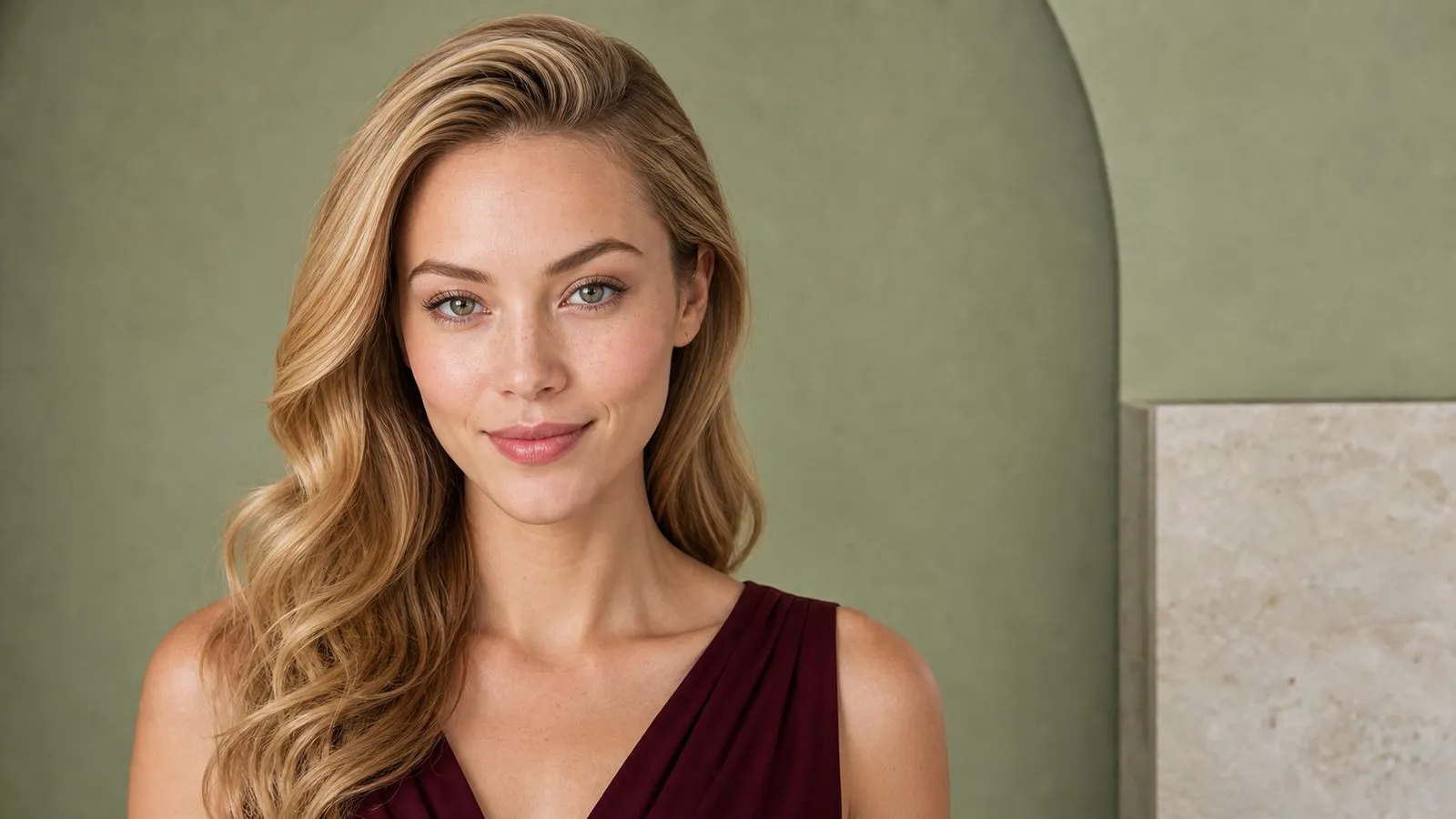
The best hairstyles for heart-shaped faces soften width at the forehead and add visual fullness around a narrower jaw and chin. A textured chin-length bob, collarbone lob, side-swept bangs, chin-starting layers, soft curtain bangs, layered curls, a wavy clavicut, and a long side-swept pixie all work because they place movement where the face naturally tapers.
That does not mean your forehead needs hiding or your chin needs disguising. Heart-shaped faces often have striking cheekbones and a defined lower point. The useful question is whether you want a haircut to balance those proportions or emphasize them. Use this guide as a shortlist, then adapt the cut to your texture, density, hairline, and daily routine.
How do I know if I have a heart-shaped face?
A heart-shaped face is widest through the forehead or upper cheekbones and narrows noticeably through the jaw to a delicate or pointed chin. Some people also have a widow’s peak, but it is not required. The clearest sign is the top-to-bottom taper: the upper face looks broader than the lower face.
Pull your hair away from your face and take a straight-on photo in even light. Compare the width of your forehead, cheekbones, and jaw. If the forehead or cheekbones are widest, the jaw is clearly narrower, and the chin comes to a soft point, your face probably leans heart-shaped.
A diamond face can also have a pointed chin, but its cheekbones are widest while the forehead is noticeably narrower. If your forehead and jaw look closer in width and your jaw has stronger corners, compare the best hairstyles for square faces. If the outline is equally wide and softly curved, see our round-face hairstyle guide. If the face is longer than it is wide and the jaw tapers gradually rather than to a point, compare our oval-face hairstyle guide. The complete face-shape haircut guide compares all six common shapes, and the face-shape analysis tool can give you a starting point from a selfie.
Best hairstyles for heart-shaped faces at a glance
| Hairstyle | Why it flatters a heart-shaped face | Best for |
|---|---|---|
| Textured chin-length bob | Places width beside the jaw and draws attention to the cheekbones | Straight, wavy, or fine hair |
| Collarbone lob with outward movement | Keeps the top sleek while the ends fill out the lower face | Fine to thick hair |
| Side-swept bangs with shoulder layers | Softens forehead width with a diagonal line | Straight, wavy, or curly hair |
| Long layers beginning at the chin | Adds movement below the cheekbones without widening the crown | Medium to long hair |
| Wispy curtain bangs with soft waves | Breaks up the forehead and blends into lower-face volume | Medium to long hair |
| Layered curls or coils | Distributes fullness around the jaw instead of only at the crown | Curly or coily hair |
| Wavy clavicut with a deep side part | Combines asymmetry above with width around the collarbone | Wavy or thick hair |
| Long side-swept pixie or bixie | Keeps short hair soft through the fringe, ears, and nape | Fine to medium hair |
1. A textured chin-length bob
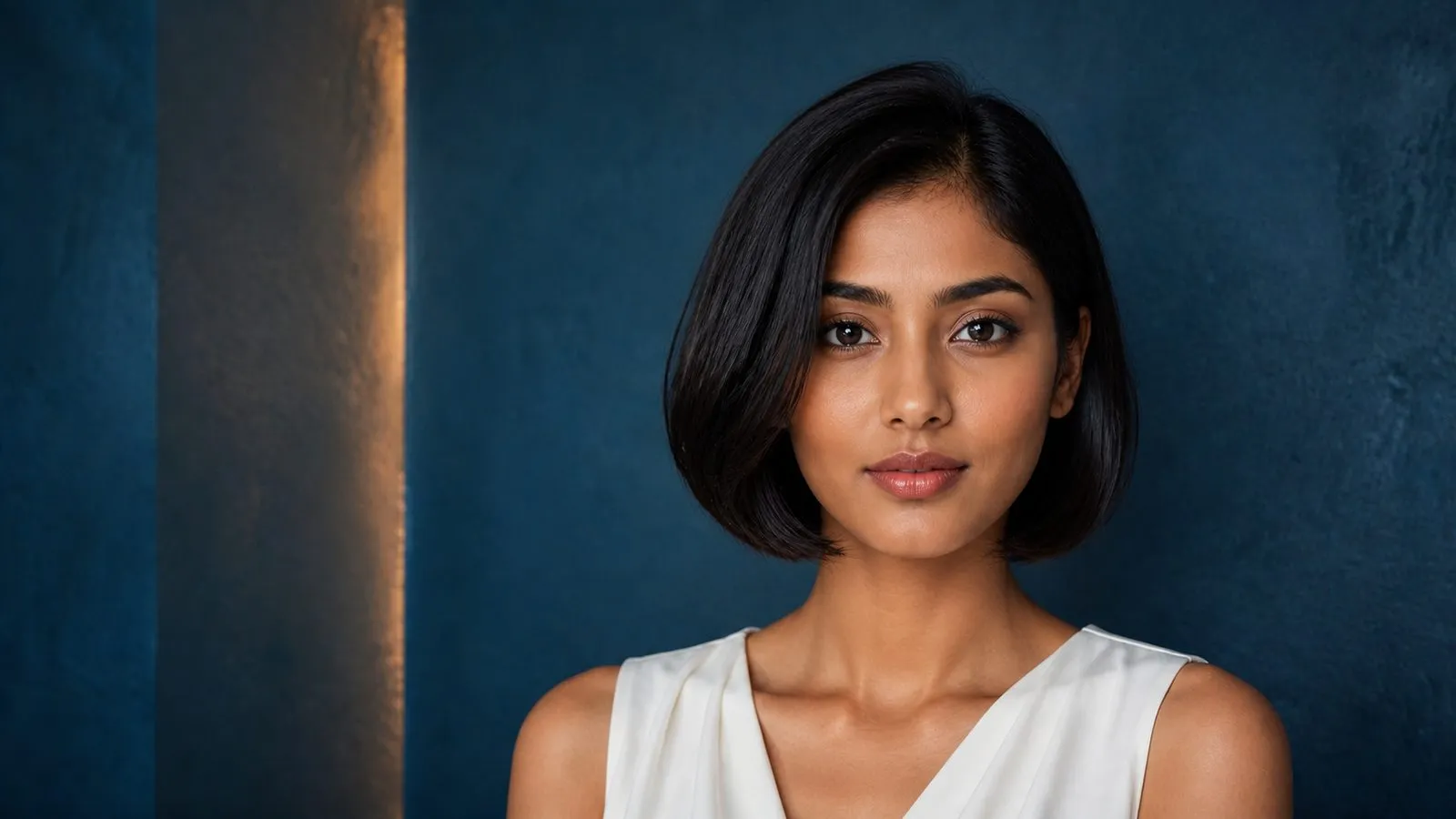
A chin-length bob is the clearest proportion-balancing cut for a heart-shaped face. Its perimeter lands beside the narrowest part of the face, so texture, a soft bend, or slightly kicked-out ends create visual width around the jaw. The length also leaves the cheekbones visible instead of covering the feature that gives a heart face its definition.
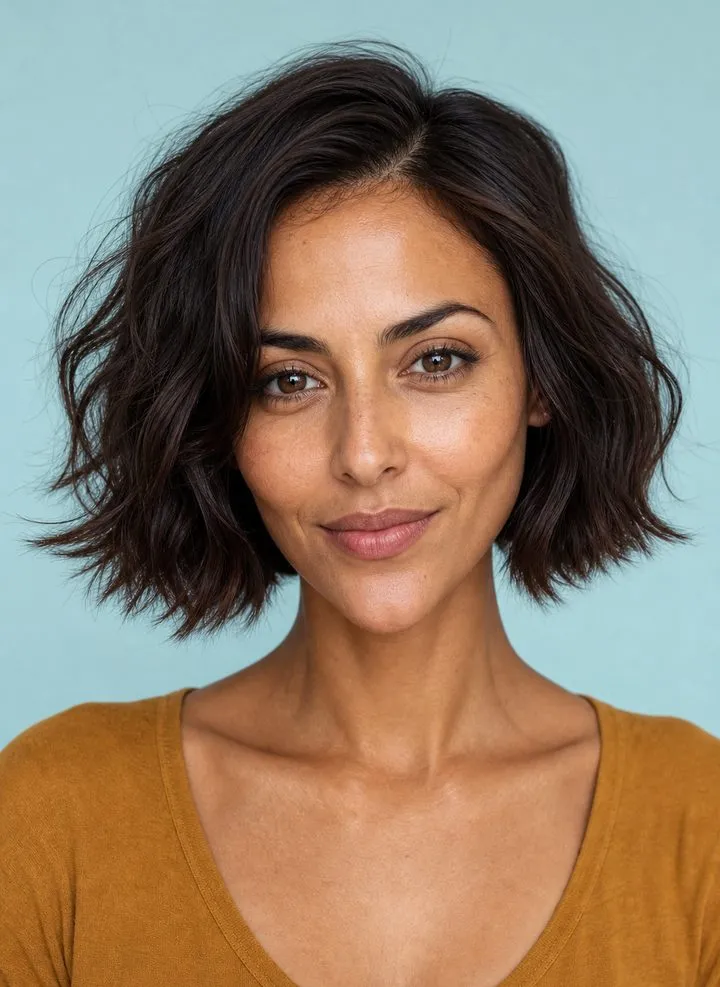
Try a textured chin-length bob on your face →
Ask for a bob that lands at the chin or a fraction below, with a softly textured perimeter rather than a severe inward taper. Fine hair can keep the outline fairly blunt for density; thick or wavy hair benefits from subtle internal layers so the ends move without becoming triangular. A relaxed Italian bob is an easy reference if you want more softness and volume.
2. A collarbone lob with flipped or textured ends
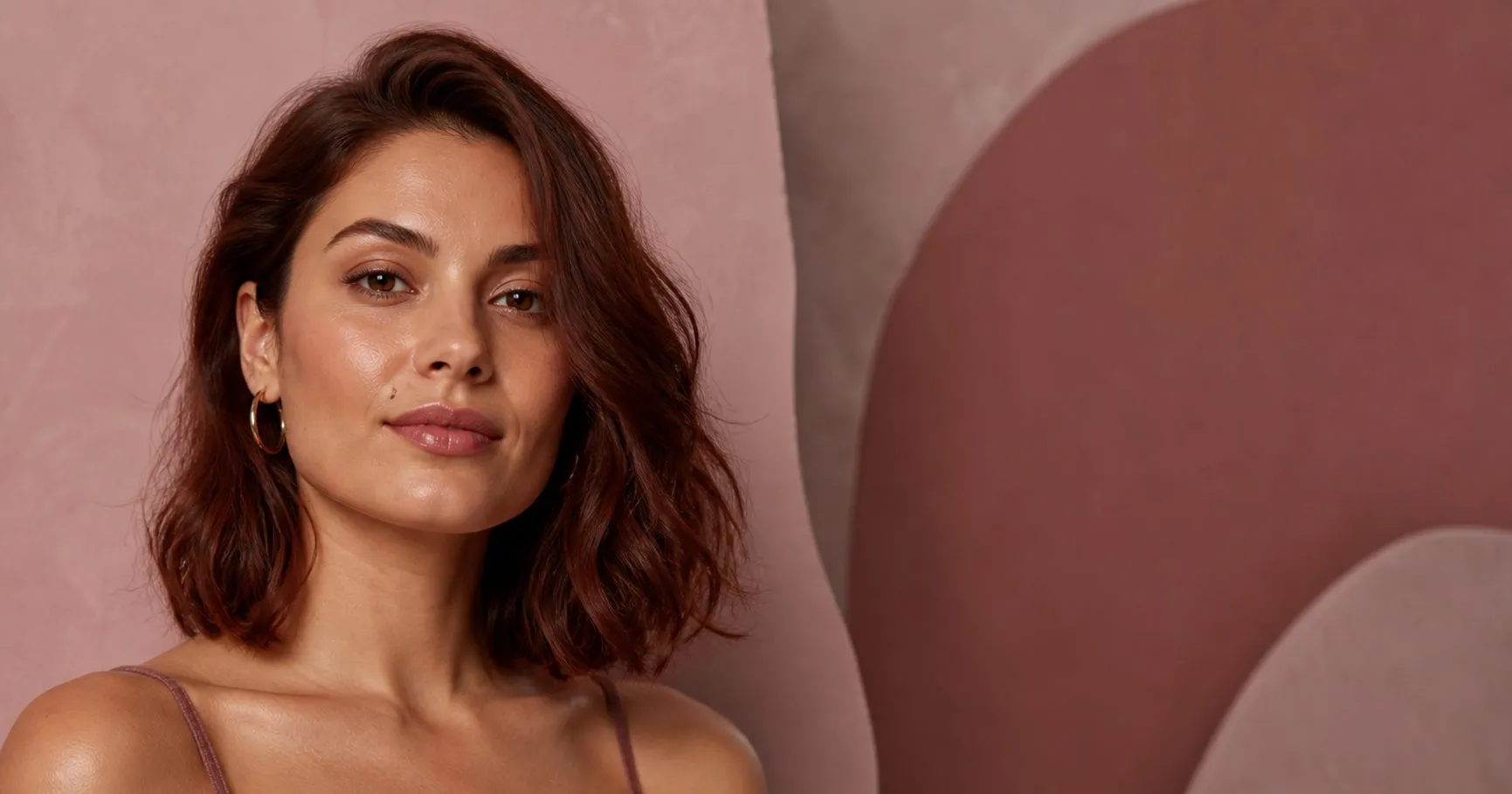
A long bob, or lob, gives you the same lower-face balance with more styling flexibility. Keep the crown controlled and let the ends turn outward, wave, or build gentle fullness from the jaw to the collarbone. That lower movement counters a broader upper face without making the haircut feel engineered around a rule.
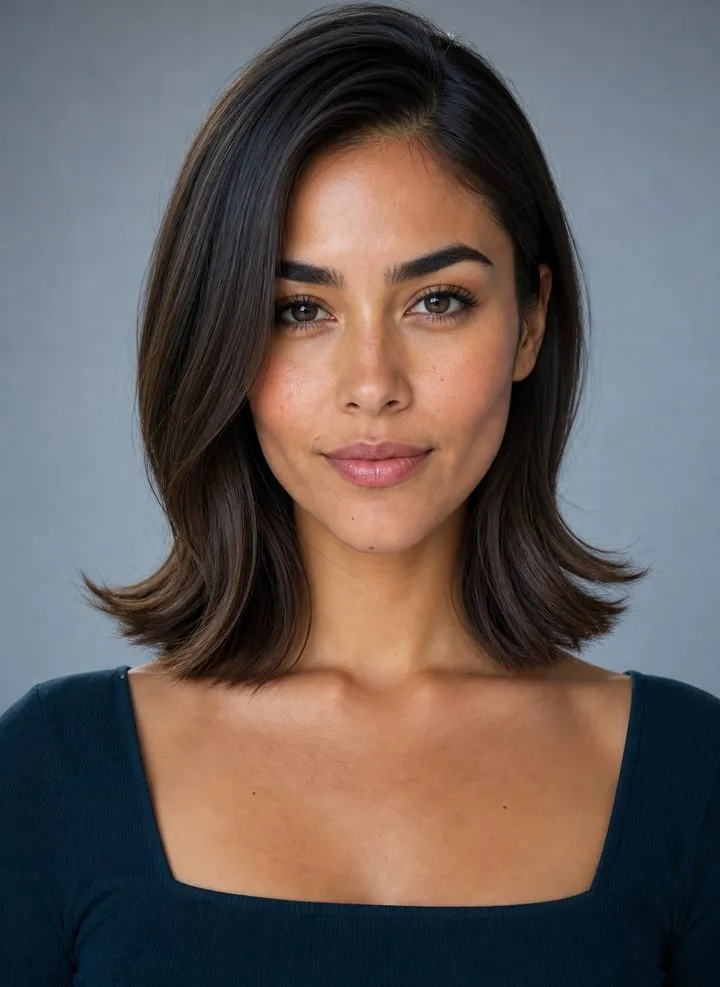
Try a collarbone lob on your face →
Ask for the longest pieces to sit at the collarbone and for any graduation to remain subtle. An aggressively stacked back can put too much volume high on the head, while a shape that narrows sharply toward the chin can repeat the face’s taper. A soft one-length edge or light layers through the final few inches keeps the visual weight low.
3. Side-swept bangs with shoulder-length layers
Long side-swept bangs create a diagonal across the forehead, which is why they are so reliable for a heart-shaped face. They interrupt the widest area without closing it off, then guide the eye toward the cheekbones. Shoulder-length layers add movement lower down so the style feels balanced from top to bottom.
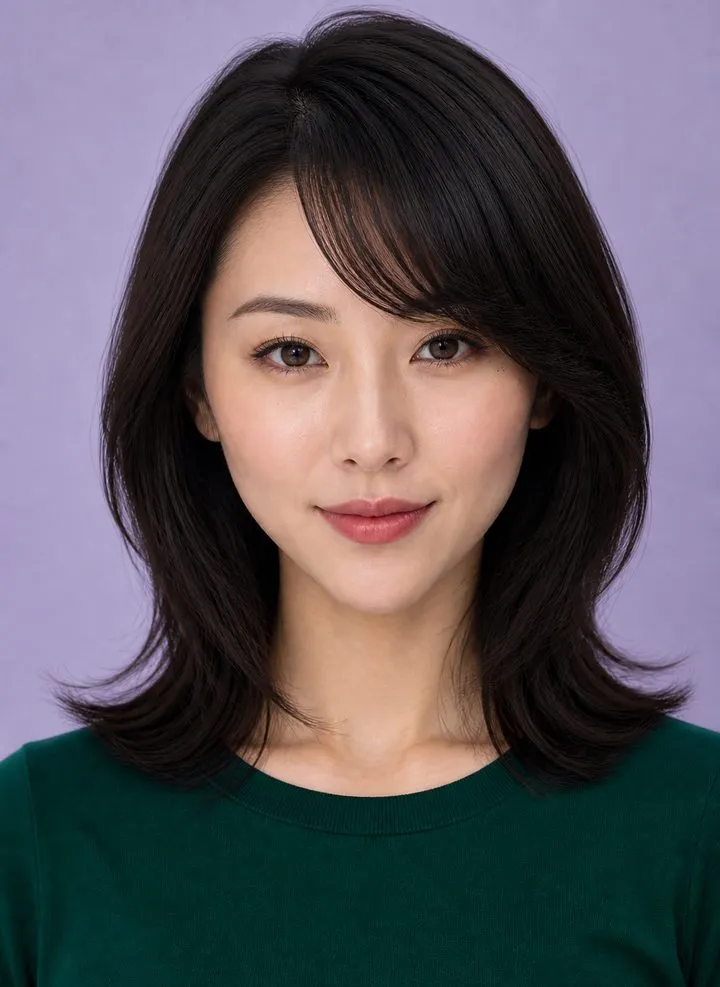
Try side-swept bangs on your face →
Keep the fringe long enough to sweep across without springing straight outward. The shortest point can sit around the brow or upper cheekbone, with the outer edge blending past the cheek. If you have a widow’s peak or strong cowlick, ask the stylist to work with its natural direction and show you the part before cutting the fringe shorter.
4. Long face-framing layers that begin at the chin
Face-framing layers suit a heart-shaped face when the shortest pieces begin around the chin rather than high at the temples. The descending layers preserve length, open the cheekbones, and build movement beside the lower face. They are especially useful if you want balance without committing to bangs or a bob.
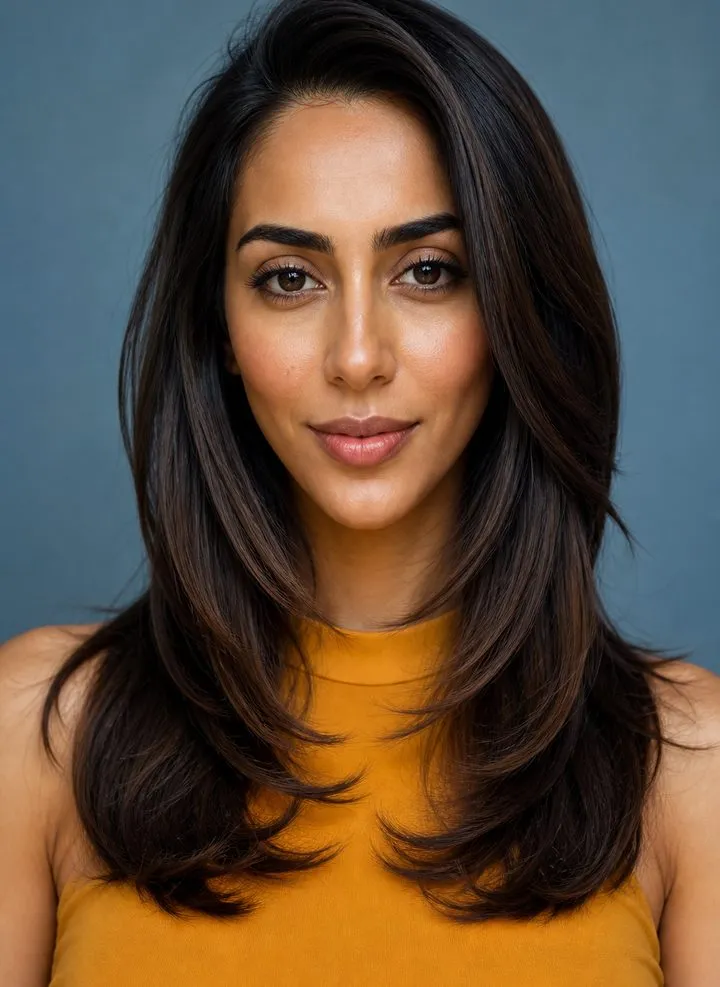
Try chin-starting face-framing layers on your face →
Ask for a gradual connection from the chin to the collarbone and through the main length. On straight hair, a rounded blowout or turned ends make the placement visible. On waves or curls, have the shortest pieces assessed in their dry shape so shrinkage does not pull all the volume back toward the cheekbones.
5. Wispy curtain bangs with soft waves
Curtain bangs can flatter a heart-shaped face when they are airy through the center and longer toward the sides. The split fringe breaks up the forehead, while its outer pieces curve past the cheekbones and join waves that are fullest nearer the jaw and shoulders.
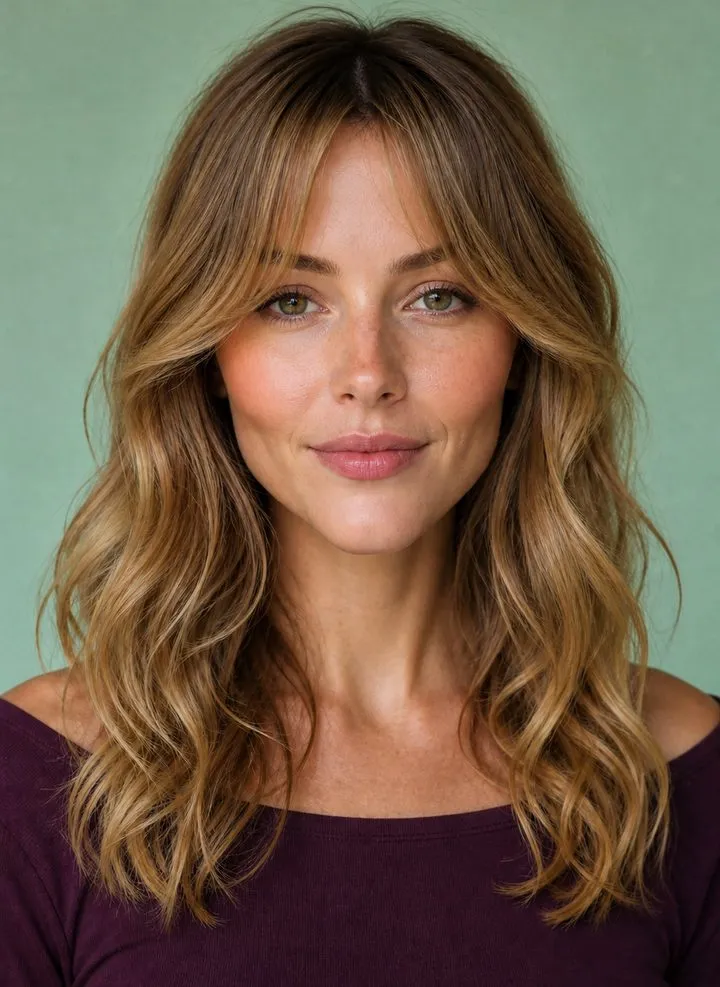
Try wispy curtain bangs on your face →
Avoid a thick triangular curtain that holds all its volume at the temples. Ask for a light center, soft edges, and enough length for the fringe to blend into the rest of the cut. If your hair is curly, the same shape works as separated curtain curls; the stylist should account for shrinkage and your natural part.
6. Layered curls or coils with fullness near the jaw
Curly and coily hair can create the ideal heart-face balance without reducing its natural volume. The aim is to distribute that volume: softness around the forehead, shape through the sides, and enough length or outward movement near the jaw and chin. A curl-by-curl bob, layered shoulder cut, or rounded twist-out can all achieve it.
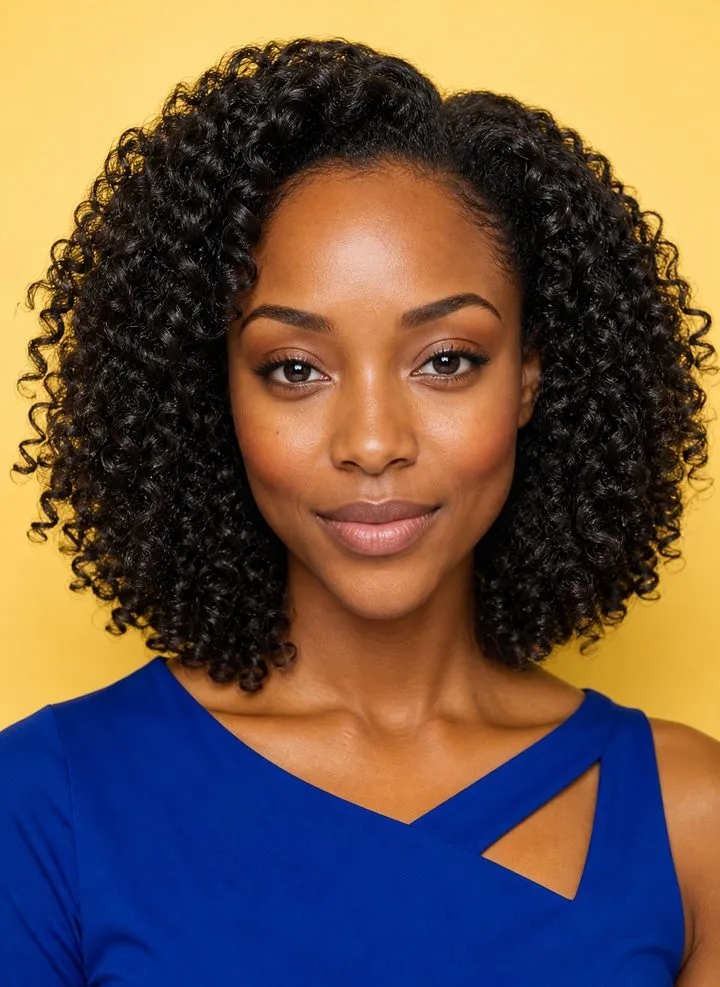
Try layered curls on your face →
Ask for the cut to be evaluated in its natural state, with the shortest layers chosen according to shrinkage. A twist-out can build controlled width around the lower half of the face, while longer layered coils create the same effect through movement. You do not need flat roots; just avoid making the crown the only place with fullness.
7. A wavy clavicut with a deep side part
A clavicut sits around the collarbone, long enough to tie back but short enough for the ends to hold shape. Pair it with a deep side part and loose waves beginning around the jaw. The part softens forehead width with asymmetry, and the waves build fullness lower down where a heart-shaped face narrows.
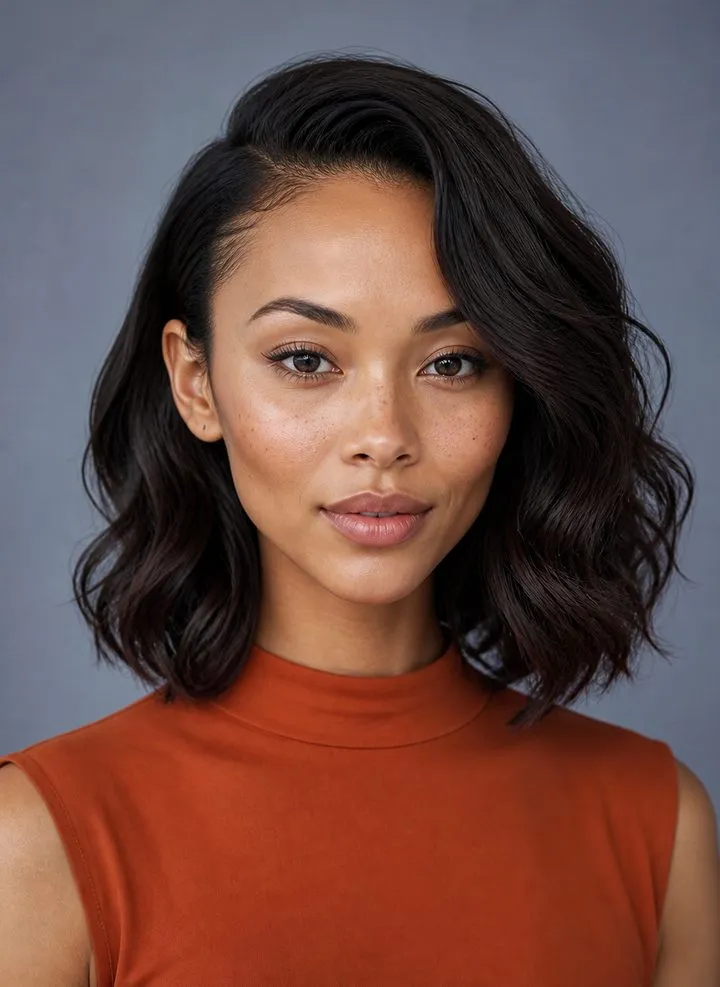
Try a wavy clavicut on your face →
Keep the crown lift gentle and the wave pattern loose rather than uniform. If the curls begin too high and disappear toward the ends, the silhouette can become top-heavy. Starting the most visible bend between the cheekbone and jaw leads the eye downward and makes the lower perimeter feel fuller.
8. A long side-swept pixie or soft bixie
Short hair works beautifully on a heart-shaped face when it keeps some softness over the forehead and a little visual weight near the ears or nape. A bixie cut or long pixie with a sweeping fringe balances the upper face through a diagonal rather than relying on height at the crown.
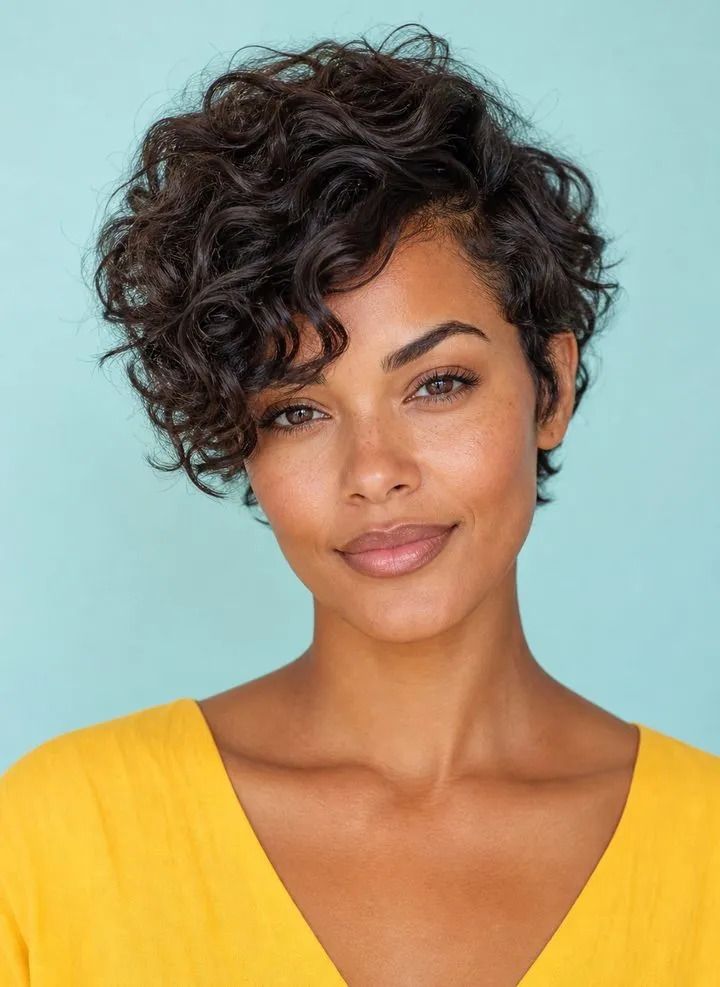
Try a side-swept bixie on your face →
Ask for longer, piecey texture through the fringe, a soft outline around the ears, and a nape that does not disappear into an extremely tight taper. If you want a bolder look, extra crown height will emphasize the face’s heart shape; if you want balance, style the top diagonally and keep some width at the sides.
The best styles by hair length
Short hairstyles for heart-shaped faces
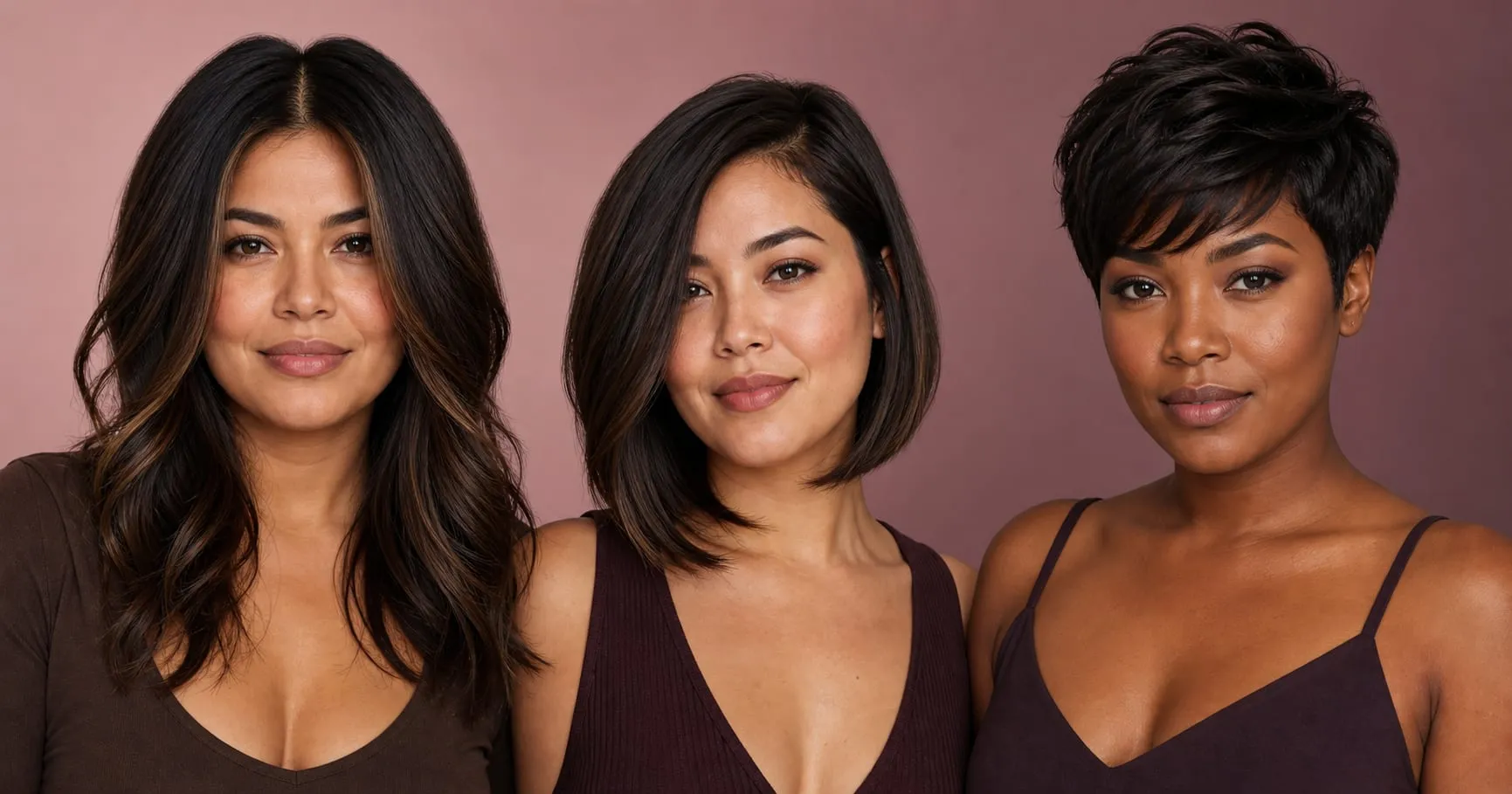
Choose a chin-length bob, soft French or Italian bob, long pixie, or side-swept bixie. The most balanced short cuts keep the fringe light and place some movement beside the ears, jaw, or nape. A very close crop with tall crown volume exposes and emphasizes the full heart outline, which can be striking when that is your goal.
Medium hairstyles for heart-shaped faces
Chin-to-collarbone lengths are the easiest to balance because the perimeter naturally fills the lower face. Try a textured lob, wavy clavicut, shoulder cut with side-swept bangs, or layered curls. Keep the ends mobile and avoid removing so much weight that they collapse into a narrow point.
Long hairstyles for heart-shaped faces
Long hair works best with layers that begin at the chin, loose waves through the lower lengths, or a fringe that softens the forehead. Completely flat hair with all the ends tapered inward can echo a narrow jaw. Preserve density through the bottom or add bends and curls below the cheekbones.
What works for straight, wavy, curly, and coily hair?
The balancing principle stays the same across textures: keep the upper silhouette from becoming the only wide point and give the lower half enough movement or weight.
- Straight hair: A chin bob, blunt-ended lob, side fringe, or long cut with chin-starting layers keeps the lower perimeter visible. Fine hair should use fewer layers so the ends stay full.
- Wavy hair: Lobs, clavicut cuts, and long layers make use of natural bend. Encourage the most visible wave around the jaw and collarbone rather than only at the temples.
- Curly hair: A layered curly bob, shoulder-length shape, or long curls with face-framing pieces can all work. Have the layers planned at their dry length.
- Coily hair: A rounded twist-out, layered coils, chin-length bob shape, soft tapered cut, or protective style with fullness near the jaw can balance the outline without shrinking the hair’s presence.
- Thick hair: Internal layers remove bulk while preserving a full outer edge. Avoid over-layering the lower lengths into a thin point.
- Fine hair: Keep a stronger perimeter at the chin or collarbone and use bangs or face-framing sparingly so the cut retains density.
The best haircut is still the one that behaves well with your natural texture and normal styling habits. Face shape should refine the decision, not override the reality of your hair.
Bangs for heart-shaped faces: what actually works?
The easiest bangs for heart-shaped faces are side-swept, wispy, or softly parted. Side-swept bangs create a diagonal across a wider forehead. Light curtain bangs divide that width and connect to the rest of the haircut. A soft, brow-skimming fringe can also work when it has separation and slightly longer corners.
A very dense straight-across fringe may make the upper half feel heavy, especially when the rest of the cut tapers tightly toward the chin. That does not make blunt bangs forbidden. Pair them with a bob, lob, curls, or full ends that give the lower silhouette enough presence, and keep the fringe proportionate to your hair density.
What should heart-shaped faces avoid?
No haircut is universally off-limits. But if your goal is to balance a heart-shaped face, approach these shapes carefully:
- Tall, concentrated crown volume with flat or tightly tapered sides
- Very short layers that make the temples the widest part of the hairstyle
- A cut that narrows sharply inward at the jaw and ends in a thin point
- Heavy temple-level volume with no movement around the chin or shoulders
- Slicked-back styles with all the fullness gathered high on the head
- Over-layered long hair that leaves the lower perimeter sparse
Each one echoes the natural top-to-bottom taper instead of counterbalancing it. If you want to emphasize your forehead, cheekbones, or pointed chin, those same silhouettes can produce a strong editorial result.
What to ask your hairstylist for
Bring reference photos that match your texture and show the exact length you want. A useful salon request is:
“I want to keep my cheekbones visible and make the overall shape feel balanced. Please keep the top from becoming too wide, add movement or fullness around my jaw and collarbone, and start the shortest face-framing pieces around my chin. Show me how the fringe or part will sit with my natural hairline.”
Tell the stylist whether you air-dry, heat-style, wear your hair tied back, or need to work around a widow’s peak, cowlick, glasses, or curl shrinkage. Those details determine whether your best version is a precise bob, a low-maintenance lob, a dry curl cut, or a short fringe that needs regular styling.
Try the hairstyle on your face before the salon
Face-shape advice can narrow the field, but it cannot account for your exact forehead, cheekbones, hairline, neck length, texture, or personal style. Compare two or three cuts on your own photo before deciding where the perimeter and fringe should land.
Get The Look lets you preview hairstyles on a selfie while keeping your features recognizable. Test one balance-focused option, such as a chin-length bob, and one shape-emphasizing option, such as a close pixie with crown height. Seeing both makes the choice more personal and less theoretical. Our guide to trying hairstyles on your own face explains how to take a clear photo and compare results fairly.
Start with a textured chin-length bob for the most direct balance, a collarbone lob for a flexible medium length, or a long side-swept pixie for a softer short cut. Favor diagonal fringe, chin-level movement, and full lower ends when you want balance—or emphasize the natural taper when you want your heart shape to lead the look.
FAQs
- Which haircut balances a wider forehead and pointed chin?
- A textured chin-length bob is one of the most flattering choices for a heart-shaped face because it adds fullness beside a narrow jaw while keeping the forehead soft. A collarbone lob, side-swept bangs, and long layers beginning at the chin create the same balancing effect at different lengths.
- Can a heart-shaped face wear a bob or pixie?
- Yes. Chin-length bobs, long pixies, and side-swept bixies can look excellent on heart-shaped faces. The most balanced short cuts keep some softness over the forehead and a little weight near the ears, nape, or jaw instead of concentrating all the volume high at the crown.
- Are side-swept or curtain bangs better for a heart-shaped face?
- Side-swept bangs are the easiest choice because their diagonal line softens a broad forehead and draws attention toward the eyes. Wispy curtain bangs also work when the center stays light and the longer outer pieces blend below the cheekbones. Avoid making the fringe so heavy that it overwhelms a narrow lower face.
- How should a heart-shaped face part the hair?
- A side or off-center part is usually the simplest way to soften forehead width and create asymmetry. A middle part can still work beautifully with curtain bangs, chin-starting layers, or waves that build fullness around the lower half of the face.
- Where should layers and length sit on a heart-shaped face?
- Chin to collarbone length is especially effective because the ends naturally add width near a narrow jaw. Long hair also suits a heart-shaped face when its shortest layers begin around the chin and the lengths have movement rather than lying completely flat and tapered against the lower face.